

Legal operations are no longer back-office functions. They have become real-time decision systems sitting at the core of enterprise trust, compliance, and revenue movement.
Across Fortune 2000 companies, courts, and regulated industries, legal workflows are now directly tied to business velocity. A contract delay can stall deals worth millions. A compliance gap has now become a reputational risk at scale.
Yet most legal systems are still built on legacy thinking. Manual reviews, fragmented document storage, email-driven approvals, and reactive compliance checks continue to dominate environments that demand precision at digital speed. This mismatch is becoming expensive. Industry research shows that legal teams still spend nearly 50-60% of their time on repetitive, non-strategic work that could be automated or system-driven.
At the same time, LegalTech is accelerating rapidly. The global market is expected to more than double in the next decade, reaching USD $3.90 billion by 2030, driven by AI-led contract intelligence, automated case analysis, and end-to-end digital legal workflows.

Therefore, the signal is clear. Legal software development is becoming one of the fastest-transforming software categories in enterprise technology.
In this shift,
Legal software development is no longer a productivity layer. It is becoming an enterprise control system. One that decides how fast decisions move, how accurately risk is detected, and how confidently organizations can scale across jurisdictions.
That is why reactive legal checks are breaking down under modern complexity. The new standard is systems that anticipate risk before it surfaces, accelerate approvals without weakening governance, and embed trust directly into every workflow. When legal software is designed as a strategic intelligence layer, it stops being a support function and becomes the operating system of enterprise trust.
What is Legal Software and why do companies need it?
Legal software refers to a wide range of digital solutions designed to simplify, manage, and enhance legal processes. These systems support legal professionals in handling casework, documentation, compliance, and regulatory requirements while also enabling businesses to operate with greater clarity and control.
At its core, legal software is not just about digitizing legal tasks. It is about bringing structure, speed, and accountability into processes that are traditionally complex and time-consuming.
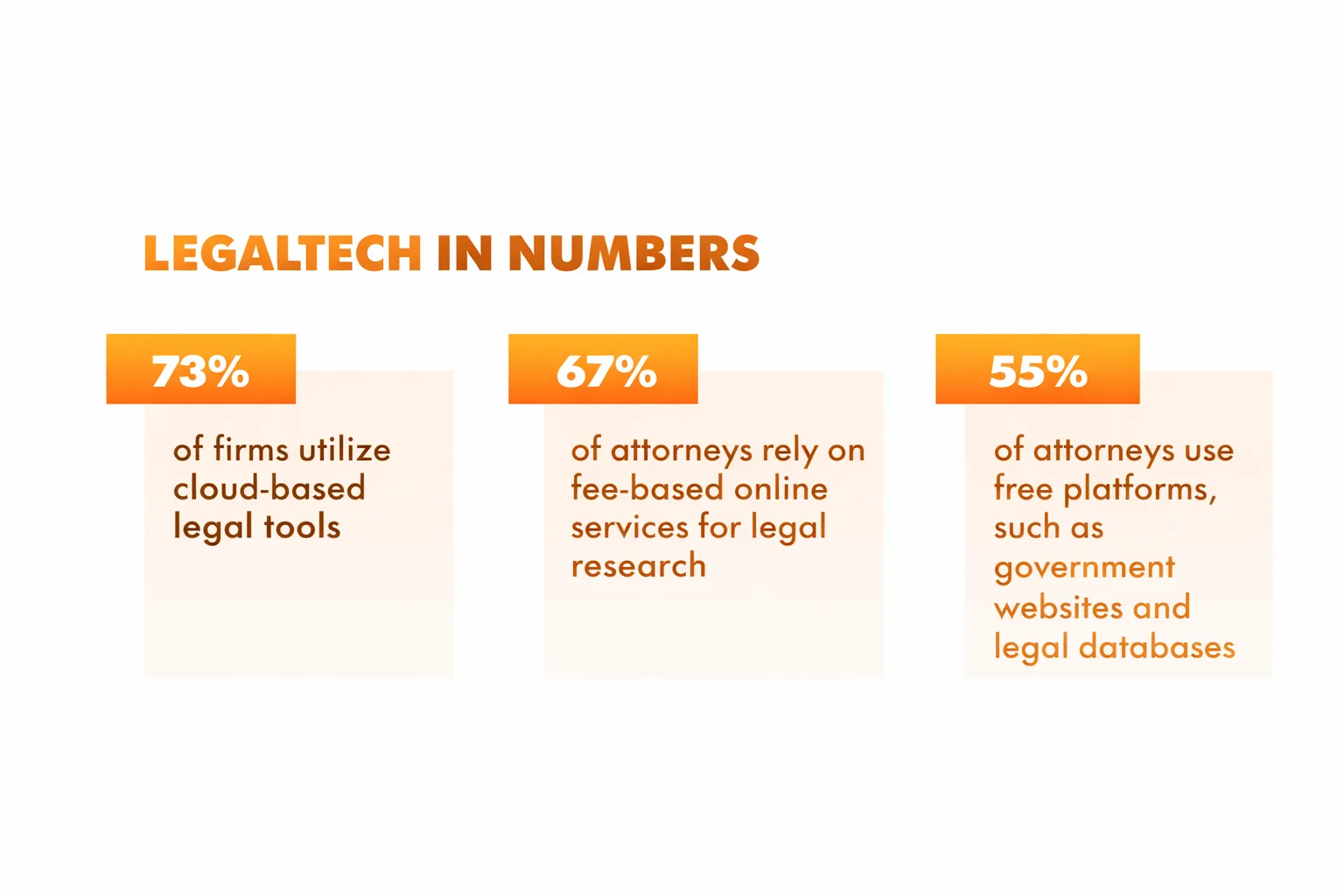
For organizations, the value goes far beyond convenience. The right legal systems can fundamentally improve how risk is managed, how decisions are made, and how efficiently operations move forward.
Some of the key advantages include:
- Faster turnaround times through automation of repetitive tasks such as document review, contract generation, and approvals
- Higher accuracy and consistency in legal processes, reducing the chances of costly errors
- Improved access to legal information, making it easier for teams to retrieve documents, track cases, and stay informed
- Stronger compliance and risk management, with built-in checks that help organizations stay aligned with regulatory requirements
- Secure handling of sensitive data, ensuring confidentiality, controlled access, and proper documentation management
As a result, LegalTech has moved from being a niche capability to a critical component of modern business infrastructure.
It is also important to understand that legal software is no longer limited to law firms or judicial institutions. Companies across industries are increasingly adopting these solutions to manage contracts, handle customer disputes, streamline mergers and acquisitions, and maintain compliance across multiple regions.
In a business environment where legal risk and operational speed are closely linked, legal software is becoming an essential layer that supports both growth and governance.
What’s in store for Legal Software Development in 2026?
Not long ago, technology in the legal world was limited to digitizing documents and storing case files. It made things more accessible, but it didn’t fundamentally change how legal work was done.
That has changed completely.
Today, AI can summarize depositions in seconds. Evidence platforms can scan hours of audio or video and highlight the exact moments that matter. Practice management systems are reducing administrative load so legal professionals can focus on actual case strategy instead of paperwork.
For attorneys, paralegals, court reporters, corporates, and investigators, this shift is not just about speed. It is about navigating a more complex, data-heavy environment with better clarity and control.
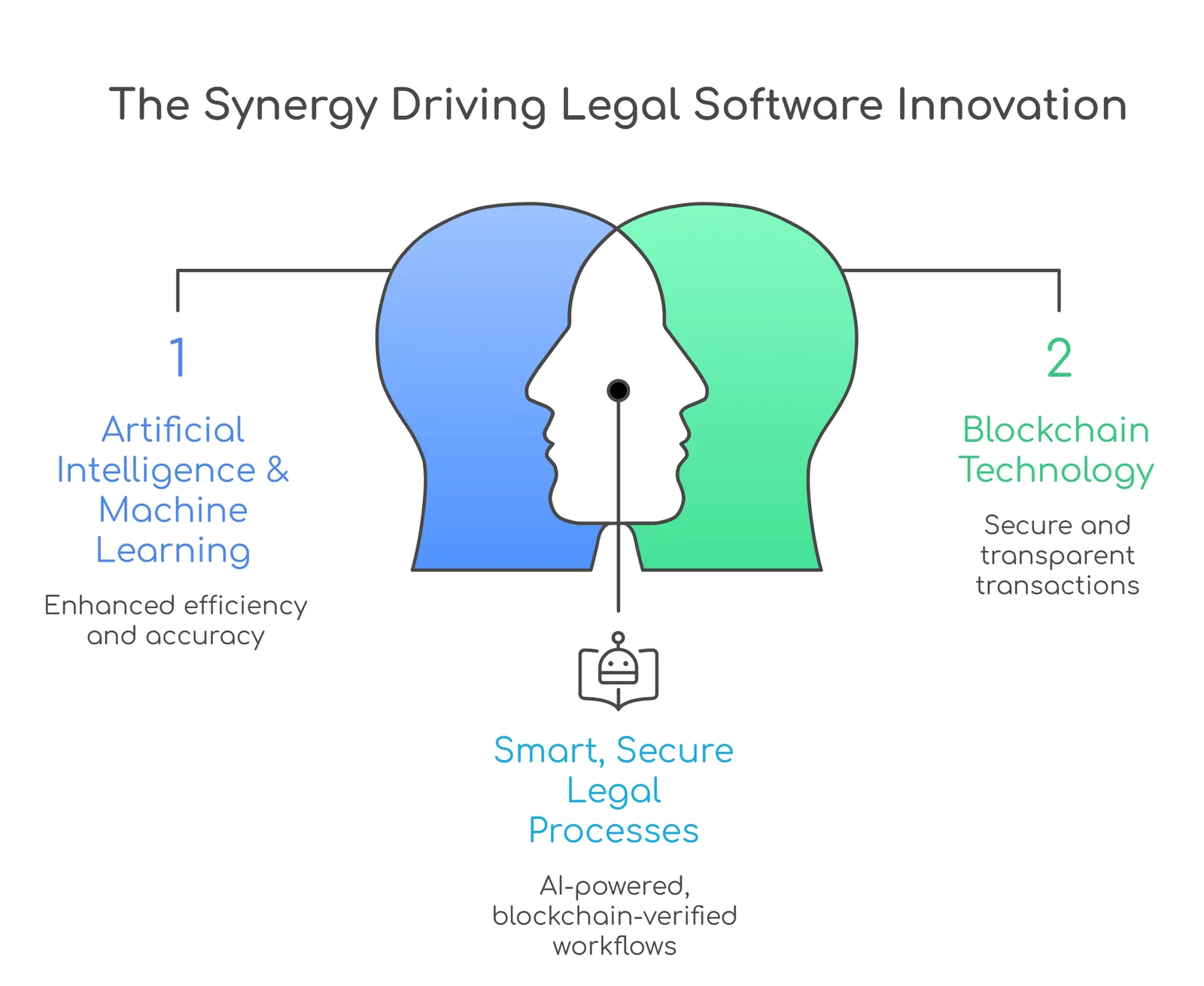
Here are the key technology trends shaping legal software development in 2026…
1. AI-Led Evidence Analysis
The volume of evidence in modern cases has grown beyond what teams can realistically review manually. Body cam footage, recorded calls, interviews, and virtual depositions can easily run into hundreds or even thousands of hours for a single case.
Legal software is now evolving to handle this scale. AI-powered platforms can process audio and video, identify key moments, detect inconsistencies across statements, and surface insights that might otherwise go unnoticed.
For defense teams, this brings stronger analytical capability. For prosecutors and investigators, it helps manage large caseloads without compromising depth. This is quickly becoming a baseline expectation rather than an added advantage.
2. Rise of Legal-Specific AI Models
General-purpose AI tools created excitement, but also exposed real risks. Inaccurate citations, missing context, and unreliable outputs made it clear that legal workflows cannot depend on generic models.
The focus is now shifting to AI built specifically for legal use. These systems are trained on legal language, case structures, and documentation formats, making outputs more reliable and usable in real scenarios.
As adoption grows, we will see more specialized models tailored to different domains such as criminal law, corporate law, and litigation, where accuracy is critical and cannot be compromised.
3. Security and Compliance as Core Architecture
Security in legal software is no longer a checklist item. It is a fundamental expectation.
With stricter regulatory scrutiny and increasing data sensitivity, legal teams are looking beyond surface-level claims. They want clarity on how data is handled, whether systems meet compliance standards, and how confidentiality is maintained.
Modern legal platforms are being designed with strong encryption, controlled access, audit trails, and clear data boundaries. The direction is clear. Trust and compliance need to be built into the system from the ground up, not added later.
4. Technology for Criminal Justice Workflows
Criminal law has traditionally been slower in adopting technology, but that gap is closing quickly.
Rising case volumes and burnout are pushing teams toward platforms that can organize evidence, manage discovery, and support trial preparation more efficiently.
These tools are helping both defense teams and prosecutors handle complexity without losing thoroughness. Over the next few years, expect significant growth in solutions built specifically for criminal justice environments.
5. Smarter Deposition and Transcription Tools
Transcription services have existed for decades, but their role is expanding.
Modern legal software now turns depositions into searchable, interactive assets. Transcripts can be linked with video, summarized automatically, and analyzed across multiple sessions.
This makes preparation faster and more effective. Instead of static documents, legal teams work with dynamic data that can be searched, compared, and annotated in real time.
6. Multi-File and Case-Level Intelligence
Legal work rarely exists in isolation. A single case often involves multiple documents, testimonies, reports, and expert inputs.
New systems are enabling cross-file analysis, where entire case folders can be processed together. AI can compare statements, highlight contradictions, and connect patterns across documents that would take days or weeks to uncover manually.
This allows teams to focus more on strategy and less on assembling information.
7. Mobile-First Legal Workflows
Legal professionals are constantly on the move, whether in courtrooms, client meetings, or field investigations.
Software is adapting to this reality. Mobile-friendly platforms now allow users to access case files, review summaries, record interviews, and stay updated without being tied to a desk.
The expectation is simple. Legal tools should work wherever legal work happens.
8. Automated Compliance and Deadline Tracking
Missed deadlines and compliance gaps are among the most common risks in legal operations, and often the most avoidable.
Modern platforms are introducing automated tracking systems that monitor critical dates, send alerts, and integrate with court timelines. This reduces reliance on manual tracking and lowers the risk of costly oversights.
For firms handling large volumes of cases, this becomes a key layer of protection.
9. Standardization Across Teams
Consistency is a major challenge, especially in larger firms where multiple professionals handle similar workflows in different ways.
Legal software is addressing this through structured templates, predefined formats, and standardized documentation processes. This ensures that information is captured uniformly, making collaboration smoother and reviews faster.
It is not about restricting flexibility. It is about enabling scale without confusion.
10. Integrated Legal Tech Ecosystems
Standalone tools are gradually being replaced by connected systems.
Legal teams no longer want separate platforms for research, documentation, communication, and case management. They expect everything to work together seamlessly.
The focus is shifting toward integrated ecosystems where data flows across tools without friction. This reduces duplication, improves visibility, and simplifies workflows.
11. Predictive Analytics for Legal Strategy
One of the most impactful shifts is the use of data to guide decision-making.
Predictive analytics tools are helping legal teams assess case outcomes, estimate settlements, and understand how similar cases have played out historically.
These insights do not replace legal expertise, but they add a layer of clarity. Teams can make more informed decisions about which cases to pursue, how to allocate resources, and how to approach negotiations.
As one industry perspective highlights, AI is already reshaping how legal work is drafted and reviewed. The next phase will influence how cases are evaluated and strategies are built.
12 Easy Steps towards Legal Software Development
Building legal software is not just a technology initiative. It is a strategic effort that sits at the intersection of law, risk, compliance, and user experience. Unlike traditional applications, legal systems must balance speed with precision, and innovation with regulatory responsibility.
Below is a structured approach to developing robust and scalable legal software.
1. Define the Legal Use Case and Scope
Every successful legal platform starts with clarity.
Identify the exact problem you are solving. It could be contract lifecycle management, compliance tracking, litigation support, document automation, or evidence management. Legal workflows vary significantly across industries, so defining the scope early helps avoid unnecessary complexity later.
At this stage, it is also critical to map stakeholders. Legal teams, compliance officers, operations leaders, and even external partners may interact with the system differently. Understanding these roles shapes how the product is designed.
2. Conduct Regulatory and Compliance Mapping
Legal software operates in highly regulated environments.
Before moving into design or development, map out all applicable regulations, data protection laws, and jurisdiction-specific requirements. This may include standards related to data privacy, document retention, auditability, and access control.
Building compliance into the foundation ensures the product does not face legal or operational roadblocks after deployment.
3. Design Workflow Architecture
Legal processes are often layered and interconnected.
Break down workflows into structured steps such as document creation, review cycles, approvals, filing, and archiving. Define how data moves across these stages and where validations or checks are required.
A well-designed workflow architecture reduces friction, improves traceability, and ensures consistency across cases or transactions.
4. Prioritize Security and Data Governance
Security is not a feature in legal software. It is the foundation.
Design systems with strong encryption, role-based access control, audit trails, and secure data storage from the beginning. Define who can view, edit, or approve specific information, and ensure all actions are logged for accountability.
Data governance policies should also cover how information is stored, shared, and retained over time.
5. Choose the Right Technology Stack
The technology stack should align with scalability, integration needs, and performance expectations.
Legal platforms often require handling large volumes of documents and data. This means choosing backend systems that support high availability and structured data management, along with frontend interfaces that are intuitive and easy to navigate.
Cloud-based architectures are commonly preferred for flexibility, but decisions should be guided by compliance and data residency requirements.
6. Build Core Features and Functional Modules
Once the foundation is set, development can begin with key modules such as:
- Document and contract management
- Case or matter tracking
- Workflow automation and approvals
- Compliance monitoring and alerts
- Search and retrieval systems
- Reporting and analytics dashboards
Each module should be designed to work independently while still being part of a unified system.
7. Integrate AI and Automation Capabilities
Modern legal software is increasingly driven by intelligence.
Introduce AI where it adds real value, such as contract analysis, document summarization, risk flagging, or predictive insights. Automation can be applied to repetitive tasks like approvals, notifications, and compliance tracking.
The focus should remain on augmenting human decision-making, not replacing it.
8. Ensure Seamless Integrations
Legal workflows do not exist in isolation.
The software should integrate with existing enterprise systems such as CRM platforms, document repositories, communication tools, and financial systems. This reduces duplication of effort and creates a more connected workflow environment.
APIs and integration layers should be designed early to avoid limitations later.
9. Focus on User Experience and Accessibility
Adoption is often the biggest challenge in legal technology.
Design interfaces that are simple, intuitive, and aligned with how legal professionals actually work. Reduce unnecessary steps, provide clear navigation, and ensure the system supports both desktop and mobile use.
A well-designed user experience can significantly improve efficiency and reduce resistance to change.
10. Test for Accuracy, Performance, and Compliance
Testing legal software goes beyond standard functionality checks.
Ensure that workflows behave correctly under different scenarios, data remains consistent, and compliance requirements are fully met. Performance testing is also critical, especially for systems handling large datasets or real-time processing.
Security testing should be thorough, given the sensitivity of legal information.
11. Deploy with Controlled Rollout
Instead of a full-scale launch, begin with a phased rollout.
Pilot the system with a smaller group of users, gather feedback, and refine the platform before expanding adoption. This helps identify gaps early and ensures smoother organization-wide implementation.
12. Maintain, Update, and Evolve Continuously
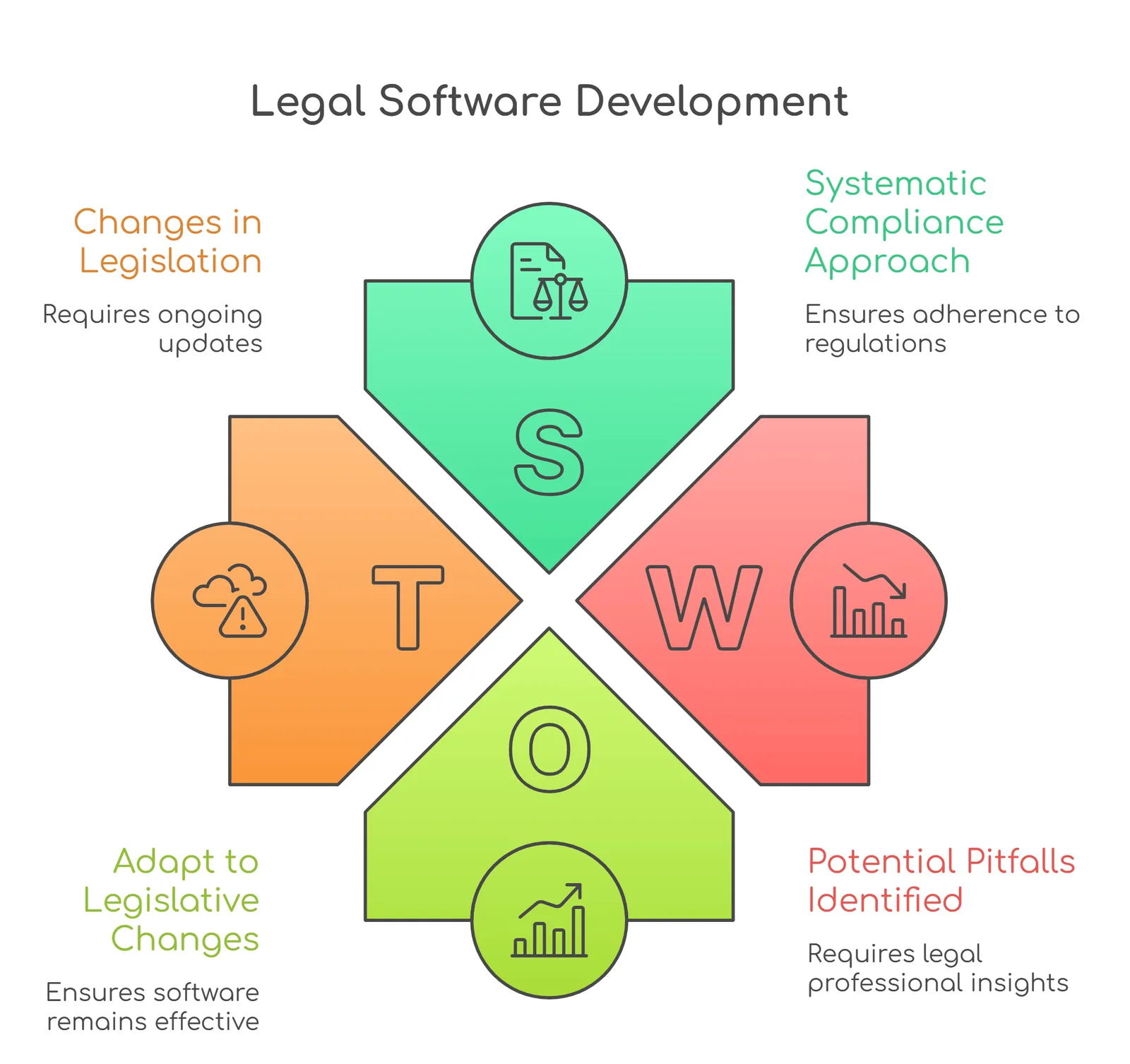
Legal and regulatory environments are constantly changing.
Post-deployment, the software must be regularly updated to reflect new laws, evolving compliance requirements, and user needs. Continuous monitoring, performance optimization, and feature enhancements ensure the platform remains relevant and effective over time.
Legal software development is not just about building tools. It is about creating systems that enable organizations to move faster while staying compliant, reduce risk while scaling operations, and maintain trust in increasingly complex environments.
When done right, it becomes a long-term strategic asset rather than just another application.
Must-have features of Legal Software
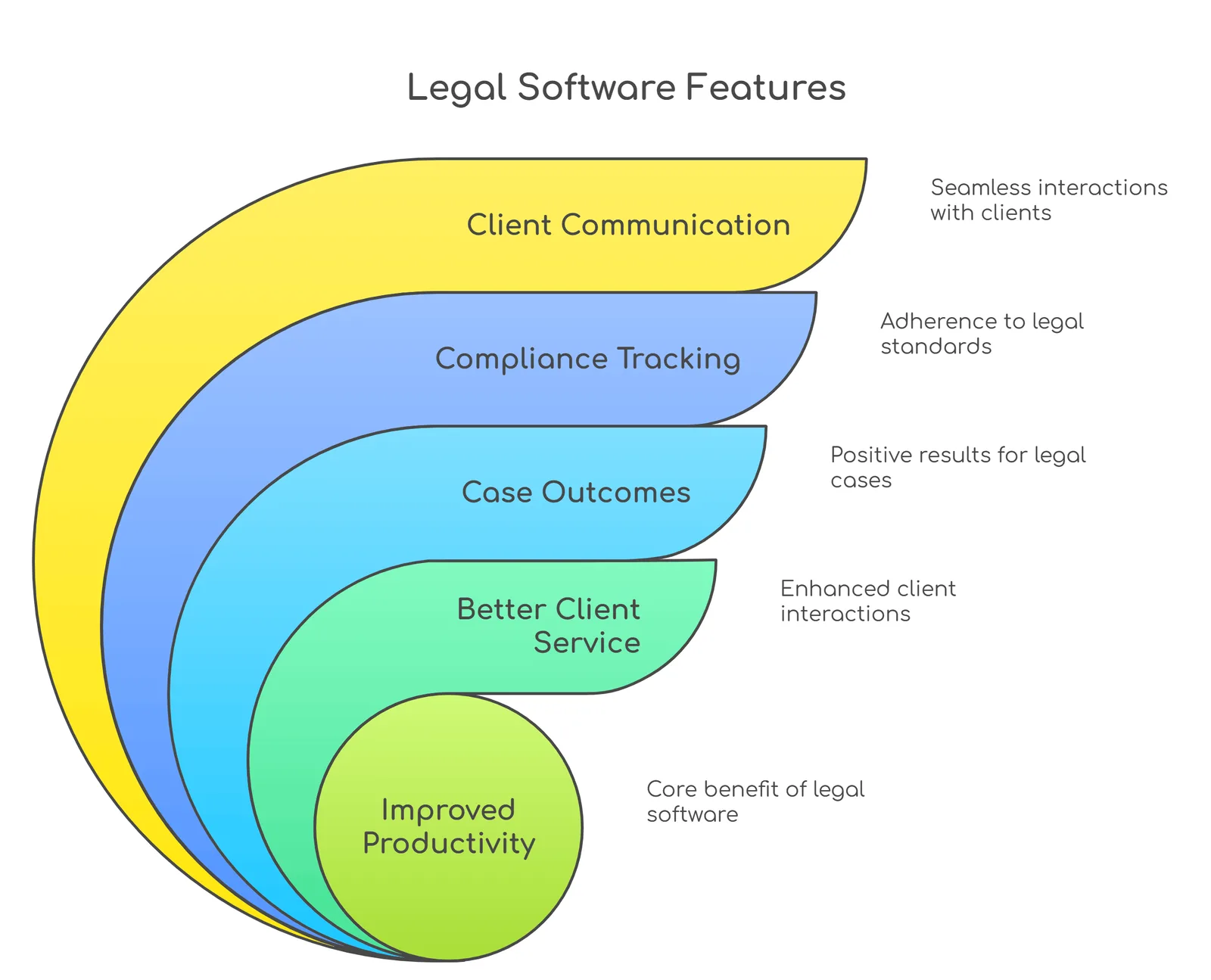
Legal practice management has evolved far beyond basic digital filing. Today, firms require integrated platforms that manage the entire lifecycle of a matter, from client intake to billing and performance insights, while reducing operational overhead and improving accuracy.
Below are the core capabilities shaping modern legal software…
1. Case and Matter Management
At the heart of any legal platform lies matter management. It acts as the central system where all case-related information is stored, organized, and accessed.
A well-designed system provides a unified view of critical details such as client information, case timelines, involved parties, and key milestones. More importantly, it connects every related function, including documents, communication, tasks, and schedules, into a single interface.
Modern systems go a step further by enabling workflow automation. Tasks, reminders, and deadlines can be triggered automatically based on case activity. This reduces manual coordination and ensures consistency across teams, especially in mid-sized and large firms handling multiple matters simultaneously.
2. Intelligent Time Tracking
Manual timesheets are quickly becoming obsolete.
Modern legal software uses automated and passive tracking mechanisms to capture billable time without interrupting workflows. Activities such as drafting emails, attending meetings, reviewing documents, or conducting research can be recorded in the background.
This approach improves billing accuracy, increases revenue capture, and reduces the administrative burden on legal professionals. It also ensures compliance with billing standards while minimizing missed billable hours.
3. Billing and Invoicing Systems
Accurate and transparent billing plays a direct role in a firm’s profitability and client trust.
Advanced legal platforms support structured billing formats required by corporate clients and insurers, while also enabling automated invoice generation and approval workflows. Pre-bills can move through defined review cycles, reducing delays and ensuring compliance with internal policies.
Additional capabilities such as customizable invoice templates, flexible rate configurations, trust accounting, and digital payment options make the billing process more efficient and client-friendly. Faster billing cycles often translate into improved cash flow and better financial visibility.
4. Centralized Calendar Management
Time-sensitive work demands precise scheduling.
A unified firm calendar provides visibility into deadlines, court dates, meetings, and internal schedules. When integrated with matter management, each calendar entry is directly linked to a case, ensuring context is never lost.
Synchronization with commonly used tools helps reduce scheduling conflicts and ensures updates are reflected across devices. Automated rule-based calendaring further strengthens deadline tracking, especially in high-volume environments.
5. Task and Workflow Management
Legal work involves multiple stakeholders and tightly managed timelines.
Modern platforms offer centralized task management systems that provide clear visibility into responsibilities, progress, and dependencies. Many solutions adopt visual formats such as board-based workflows to make tracking easier.
This improves accountability across teams, helps balance workloads, and ensures that critical steps are not overlooked. As a result, firms can manage larger caseloads with greater predictability and control.
6. Contact and Relationship Management
Legal operations rely heavily on managing relationships across clients, partners, experts, and other stakeholders.
A strong contact management system connects individuals and organizations to specific matters, enabling better visibility into relationships and interactions. This linkage supports essential functions such as conflict checks, client onboarding, and communication tracking.
It also improves data accuracy, reduces duplication, and enables firms to build stronger, long-term client relationships based on reliable information.
7. Document Management and Automation
Handling large volumes of documents is a core aspect of legal work.
Modern legal software centralizes document storage within each matter, ensuring easy access, version control, and structured organization. This eliminates the inefficiencies of scattered storage systems.
Automation further enhances this capability. Templates can dynamically populate with relevant case or client data, reducing manual effort and ensuring consistency across documents.
Advanced search features powered by AI and text recognition technologies allow users to quickly locate specific information within documents, significantly reducing time spent on manual searches.
8. Secure Client Portals
Client expectations have shifted toward greater transparency and accessibility.
Secure client portals provide a controlled environment where clients can access documents, track case progress, communicate with legal teams, and manage payments. This reduces dependency on email communication and improves response times.
By offering real-time visibility into case developments, portals enhance client engagement and strengthen trust throughout the engagement lifecycle.
9. Analytics and Performance Insights
Legal firms are increasingly operating like data-driven businesses.
Modern platforms provide real-time dashboards that track key performance indicators such as productivity, billing efficiency, and cash flow. These insights help leadership teams understand how resources are being utilized and where improvements are needed.
Predictive capabilities are also emerging, enabling firms to forecast outcomes, identify underperforming areas, and make informed strategic decisions. This shifts legal operations from reactive reporting to proactive management.
10. Data Security and Compliance Frameworks
Security is a non-negotiable requirement in legal environments.
Legal software must protect sensitive information through strong encryption, controlled access mechanisms, and continuous monitoring. Features such as multi-factor authentication, role-based permissions, and audit trails ensure that only authorized individuals can access critical data.
In addition, compliance tools help firms align with regulatory standards across different jurisdictions. Built-in conflict-checking mechanisms further reduce legal and ethical risks by identifying potential issues before new matters are initiated.
11. Client Intake and Lead Management
Sustainable growth depends on how effectively firms manage new business opportunities.
Modern intake systems streamline how potential clients are captured, evaluated, and converted into active cases. This includes collecting information through digital forms, automating follow-ups, and assigning internal actions.
By connecting intake processes with conflict checks and matter creation, firms can ensure a smooth transition from lead to engagement. At the same time, tracking referral sources and conversion metrics provides valuable insights into business development efforts.
The legal software landscape is moving toward fully integrated, intelligent systems that combine operational efficiency with strategic insight. Firms that invest in these capabilities are not just improving internal workflows. They are building a foundation that allows them to scale efficiently, respond faster, and maintain trust in an increasingly complex legal environment.
Cost to develop a Legal Software
The cost of developing legal software is not fixed. It varies significantly based on the complexity of the solution, the level of automation involved, security requirements, and the scale at which the platform is expected to operate.
Unlike generic applications, legal systems demand a higher level of precision, compliance, and data protection. This makes them more intensive to design, build, and maintain.
At a high level, the investment typically depends on the following factors:
1. Scope and Complexity of the Product
A basic legal solution, such as a document management system or contract repository, requires far less effort compared to a full-scale platform that includes case management, billing, analytics, and AI capabilities.
- Basic tools with limited features may range from $25,000 to $50,000
- Mid-level platforms with workflow automation and integrations can range between $50,000 to $120,000
- Enterprise-grade systems with AI, predictive analytics, and advanced compliance layers can exceed $150,000 to $300,000+
The broader the scope, the higher the investment required in both development and long-term scaling.
2. Feature Set and Functional Depth
The number and sophistication of features directly impact development cost.
Core features like matter management, billing, and document storage form the foundation. However, adding advanced capabilities such as AI-driven contract analysis, automated compliance tracking, or predictive insights significantly increases development effort.
Each additional module requires design, backend logic, testing, and integration, all of which contribute to the overall cost.
3. Security and Compliance Requirements
Legal software handles highly sensitive data, which makes security a critical cost driver.
Implementing features such as encryption, audit trails, role-based access control, and compliance frameworks requires specialized expertise. If the software needs to meet global standards or operate across multiple jurisdictions, the complexity increases further.
Investing in security upfront reduces long-term risks but adds to initial development costs.
4. Technology Stack and Architecture
The choice of technology influences both performance and cost.
Cloud-based architectures, microservices, and scalable databases are often preferred for legal platforms handling large volumes of data. While these improve flexibility and scalability, they require experienced engineering teams and careful system design.
Additionally, integrating AI capabilities or real-time processing systems can further increase infrastructure and development expenses.
5. Integrations with External Systems
Modern legal software rarely operates in isolation.
Integration with third-party tools such as CRM systems, payment gateways, document repositories, and communication platforms adds another layer of complexity. Each integration requires API development, testing, and ongoing maintenance.
The more connected the ecosystem, the higher the development effort.
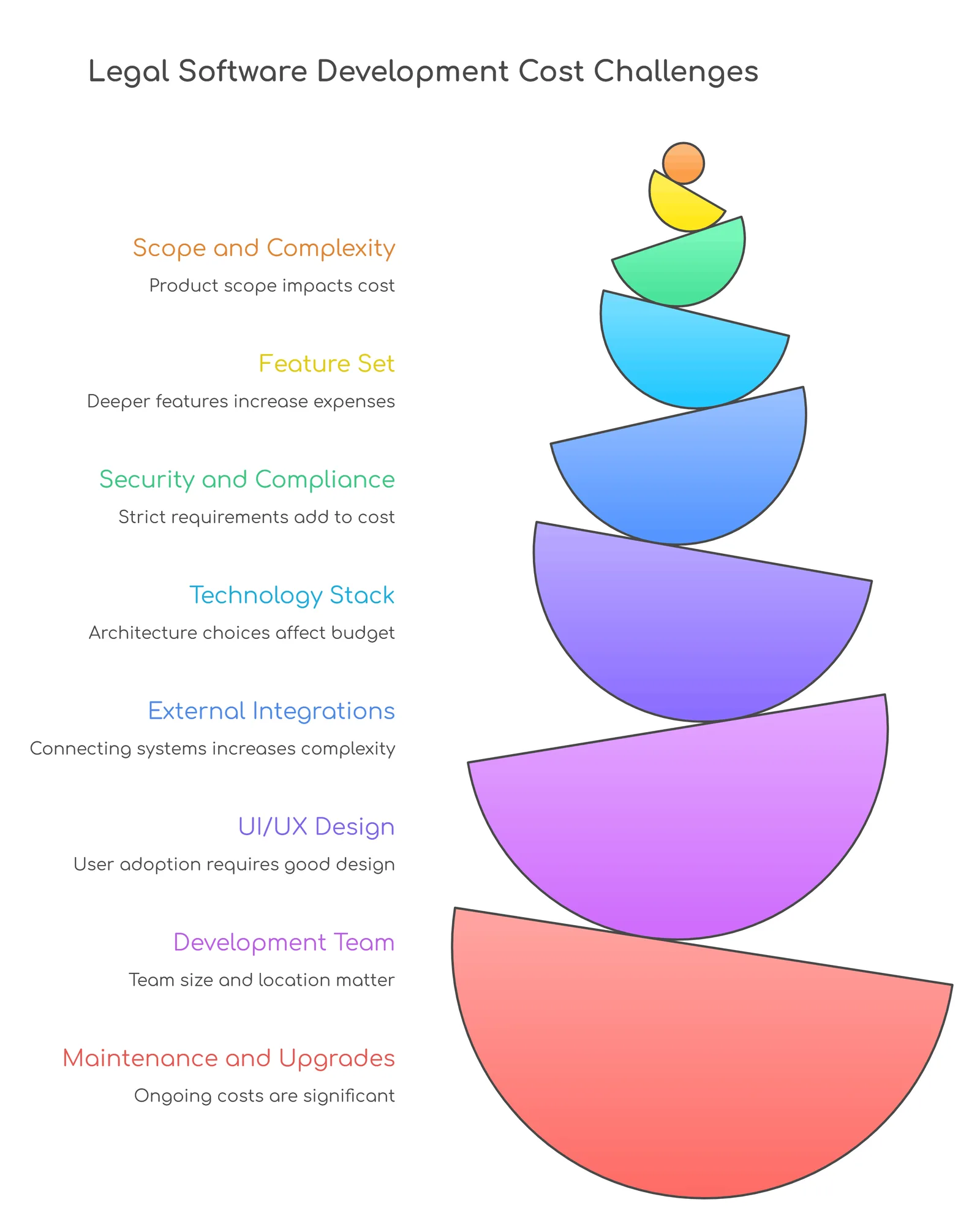
6. UI/UX Design and User Adoption
Legal professionals often work under time pressure, which makes usability critical.
Designing intuitive interfaces that simplify complex workflows requires thoughtful planning, user research, and multiple iterations. While this may increase upfront costs, it significantly improves adoption and long-term efficiency.
Poor user experience, on the other hand, can lead to underutilization of the system.
7. Development Team and Location
The cost of development also depends on the team structure and location.
- In-house teams offer more control but involve higher long-term costs
- Outsourced development partners can reduce costs while providing access to specialized expertise
- Hybrid models combine both approaches for flexibility and efficiency
Geography plays a role as well, with development costs varying across regions depending on talent availability and experience levels.
8. Maintenance and Continuous Upgrades
Development is only the beginning.
Legal software requires ongoing updates to adapt to regulatory changes, improve performance, and introduce new features. Maintenance typically accounts for 15 to 25 percent of the initial development cost annually.
This includes bug fixes, security updates, infrastructure costs, and feature enhancements.
Investing in legal software development is about creating a system that can handle risk, ensure compliance, and support decision-making at scale. Organizations that approach this as a long-term capability rather than a one-time expense are better positioned to extract real value. The focus should not only be on reducing upfront costs, but on building a solution that remains reliable, secure, and adaptable as the business grows.
Legal Software Development Cost Comparison
| Parameter | Basic Legal Software | Advanced Legal Software | Complex / Enterprise Legal Software |
| Estimated Cost | $25,000 - $50,000 | $50,000 - $120,000 | $150,000 - $300,000+ |
| Best For | Small firms, startups, single-use cases | Growing firms, multi-team operations | Large enterprises, multi-jurisdiction operations |
| Key Features | Document management, basic search, and user access | Matter management, billing, automation, integrations | AI analytics, predictive insights, compliance systems, and advanced integrations |
| Automation Level | Minimal | Moderate (workflow automation, reminders) | High (AI-driven automation, decision support) |
| AI Capabilities | None or very limited | Basic AI (document tagging, summaries) | Advanced AI (contract analysis, predictive analytics, risk detection) |
| Integrations | Limited or none | CRM, email, payment systems | Enterprise systems, APIs, third-party ecosystems |
| Security Level | Standard security | Role-based access, encryption | Enterprise-grade security, audit trails, compliance frameworks |
| Development Time | 2 - 4 months | 4 - 8 months | 8 - 14+ months |
Quick insight for decision-makers
- Basic solutions work when the goal is digitization
- Advanced systems are ideal for operational efficiency and growth
- Enterprise platforms are built for scale, intelligence, and long-term competitive advantage
Data Security & Confidentiality: The Most Critical & Non-Negotiable Aspect of Legal Software Development
In legal ecosystems, data is evidence, strategy, identity, and trust combined.
Every contract, case file, deposition, and client interaction carries a level of sensitivity that goes beyond typical enterprise data. A single breach does not just result in financial loss. It can compromise cases, violate client privilege, and permanently damage institutional credibility.
That is why, in legal software development, security and confidentiality cannot be treated as features. They must be embedded into the very architecture of the system.
Why does security take priority over everything else?
Legal workflows operate under strict ethical and regulatory obligations. Client confidentiality is foundational to the profession, and any compromise can lead to legal consequences, reputational damage, and loss of business.
At the same time, legal systems are becoming more interconnected. Cloud storage, remote access, third-party integrations, and AI-driven processing have expanded the attack surface. This makes traditional approaches to security insufficient.
Modern legal software must be designed with the assumption that threats are constant and evolving.
But, when all of this security fails?
The risks are not theoretical. Several high-profile incidents have shown how vulnerable legal ecosystems can be when security is not treated as a priority.
- The Panama Papers leak exposed over 11 million documents from a law firm, revealing sensitive financial information of global leaders, corporations, and high-net-worth individuals. The breach was traced back to weak security practices, not sophisticated hacking.
- The DLA Piper cyberattack brought one of the world’s largest law firms to a standstill. Systems were locked, operations were disrupted globally, and recovery took weeks, highlighting how cyber incidents can directly halt legal operations.
- In 2020, the Grubman Shire Meiselas & Sacks breach exposed confidential data related to high-profile clients, including celebrities and corporations. The breach quickly escalated into extortion, proving how sensitive legal data can be weaponized.
- The SolarWinds cyberattack also impacted multiple legal and compliance environments indirectly, showing how vulnerabilities in third-party systems can cascade into critical sectors.
These incidents underline a simple truth. Legal data is a high-value target, and even minor gaps in security can lead to large-scale consequences.
Building security into the foundation
Security in legal software is most effective when it is proactive, not reactive.
- This begins with end-to-end encryption, ensuring that data remains protected both while stored and while being transmitted. Even if intercepted, the information remains unreadable without proper authorization.
- Role-based access control ensures that individuals only have access to the information necessary for their role. A junior associate, for example, should not have the same level of visibility as a senior partner or compliance head.
- Multi-factor authentication adds an additional verification layer, reducing the risk of unauthorized access even if credentials are compromised.
- Beyond access, audit trails play a critical role. Every action within the system, whether it is viewing, editing, or sharing a document, must be recorded. This not only strengthens accountability but also supports compliance requirements during audits or investigations.
Confidentiality in the Age of AI
As AI becomes more integrated into legal workflows, confidentiality takes on a new dimension.
Legal software must ensure that sensitive data is not unintentionally exposed during model training or processing. Systems should clearly define how data is used, stored, and isolated.
Organizations are increasingly prioritizing solutions where their data is not used to train external models. This level of control is becoming a key decision factor when selecting technology partners.
In this environment, transparency around data handling is as important as the technology itself.
Compliance is a must
Legal software often operates across multiple jurisdictions, each with its own regulatory requirements.
This includes data protection laws, industry-specific compliance standards, and internal governance policies. Systems must be capable of adapting to these requirements without disrupting workflows.
Features such as automated compliance checks, configurable data retention policies, and jurisdiction-based controls help organizations stay aligned with evolving regulations.
More importantly, compliance should not slow down operations. The goal is to embed it seamlessly into the workflow so that adherence becomes automatic rather than manual.
Managing risk in a connected ecosystem
Modern legal platforms rarely function in isolation. They integrate with communication tools, financial systems, document repositories, and external databases.
Each integration introduces potential vulnerabilities.
To manage this, secure APIs, strict authentication protocols, and continuous monitoring are essential. Data exchange must be controlled and validated at every step to prevent unauthorized access or leakage.
Regular security assessments, penetration testing, and system audits further strengthen resilience against emerging threats.
Human layer of security
Technology alone cannot guarantee security.
Human behavior remains one of the biggest risk factors. Weak passwords, improper data sharing, or a lack of awareness can undermine even the most secure systems.
That is why legal software must be supported by clear governance policies, user training, and built-in safeguards that guide behavior. Simple measures such as restricted downloads, watermarking sensitive documents, and session timeouts can significantly reduce risk.
The lesson from every major breach is clear. Legal systems are trust infrastructures. Organizations that treat security as a core design principle will not only protect themselves from risk but also position themselves as reliable partners in high-stakes environments. Because in legal ecosystems, innovation may drive growth, but trust is what sustains it.
Monetization Models for LegalTech Products
The way LegalTech products generate revenue is evolving rapidly. Traditional pricing models such as flat fees or simple per-user subscriptions are no longer sufficient, especially with the rise of AI-driven capabilities that introduce variable infrastructure and compute costs.
Today, most LegalTech platforms are moving toward hybrid and value-linked pricing models. These approaches combine predictable recurring revenue with flexible, usage-based components, allowing businesses to scale while aligning costs with actual value delivered.
Below is a breakdown of the most widely adopted monetization models in LegalTech…
1. Subscription-Based Models (Recurring Revenue)
Subscription models remain the foundation for most LegalTech platforms, offering predictable income and easy adoption for customers.
- Per User or Per Seat Pricing
Organizations pay based on the number of users accessing the platform, typically on a monthly or annual basis. This model is widely used in practice management and document automation tools.
- Tiered Pricing Plans
Different pricing levels are offered based on features, usage limits, or support. This allows firms of varying sizes to choose plans that match their needs and scale over time.
- Flat-Rate Subscriptions
A fixed fee provides access to the platform, often with minimal restrictions. This appeals to firms that prefer cost predictability over variable billing.
- Enterprise or Firm-Wide Licensing
Instead of charging per user, organizations pay a single fee for company-wide access. This model is common in legal research and knowledge management platforms.
2. Usage-Based and Consumption Models
As AI and data-intensive features become central to LegalTech, pricing is increasingly tied to actual usage.
- Credit or Token-Based Systems
Users purchase credits upfront and consume them as they use AI features such as document drafting, contract analysis, or research queries.
- Data Volume-Based Pricing
Common in litigation and eDiscovery platforms, where pricing depends on the amount of data processed, stored, or analyzed.
- Transaction-Based Fees
In LegalTech products with financial components, such as payments or escrow services, pricing may be linked to transaction value or volume.
- Pay-As-You-Go Models
Users are charged only when they use specific services, making it easier to adopt tools without long-term commitments.
3. Value and Outcome-Based Models
A more advanced shift in monetization is toward pricing that reflects actual outcomes and business impact.
- Performance-Based Pricing
Revenue is generated when the platform delivers measurable results, such as successful contract processing, case resolution support, or workflow completion.
- Value-Based Pricing
Pricing is aligned with the value created for the client, whether through cost savings, improved efficiency, or increased revenue generation.
These models are particularly relevant for AI-driven platforms where the output directly influences business outcomes.
4. Marketplace and Referral Models
Some LegalTech platforms operate as ecosystems, connecting users with legal service providers.
- Commission or Success Fees
Platforms earn a percentage for connecting clients with lawyers or legal services, especially in marketplaces or lead generation platforms.
- Ad-Supported Access
Certain platforms offer free tools or legal information and generate revenue through targeted advertising aimed at professionals or end users.
5. Hybrid and Specialized Models
To balance scalability and predictability, many LegalTech companies are adopting blended approaches.
- Hybrid Pricing Models
A base subscription fee is combined with usage-based charges, particularly for AI-driven features. This ensures steady revenue while allowing flexibility for customers.
- Freemium Model
A limited version of the product is offered for free, encouraging adoption. Advanced features and capabilities are unlocked through paid plans.
- White-Label Solutions
Legal platforms are offered to firms that can rebrand and provide them as part of their own service offerings, creating an additional revenue stream.
- Data-Driven Insights Monetization
Aggregated and anonymized data can be used to generate insights, benchmarks, or analytics products, provided it complies with data privacy regulations.
Monetization in LegalTech is no longer just about access to software. It is about aligning pricing with usage, outcomes, and value delivered.
The most successful platforms are those that strike the right balance between predictable revenue and flexible scaling. As AI continues to reshape legal workflows, pricing strategies will increasingly reflect not just what the software does, but the impact it creates.
How we built India’s first legal app, India Legal?
Building India’s first truly accessible legal platform was never about launching just another app. It was about solving a problem that has existed for years.
Legal services in India have often been fragmented, slow, and difficult to navigate. For individuals and even growing businesses, something as basic as finding the right lawyer or getting documents prepared could feel overwhelming. Delays, unclear pricing, and a lack of transparency made the experience even more frustrating.
That’s where India Legal came in with a bold vision, and we partnered with them to bring it to life.
- Simplifying what was always complicated
From day one, the vision behind India Legal was simple. Make legal support as easy as using any modern digital service, without compromising on trust or quality.
This was not about digitizing existing workflows. It was about rethinking them entirely.
Together, we focused on building a platform where users could access legal help instantly, without dealing with multiple layers of communication or confusion around pricing and processes. The goal was to introduce clarity, speed, and accessibility into a space that had long lacked all three.
- Built around real problems
India Legal was designed for real users and real situations.
We worked closely to identify the everyday challenges faced by individuals and businesses. From contract creation and legal consultations to documentation and finding the right expert, every feature was shaped around actual needs rather than assumptions.
The platform enables:
- Instant access to legal services through a simple and intuitive interface
- One-tap solutions that eliminate unnecessary back-and-forth
- Flexible, customized plans based on user requirements
- Affordable services that make legal support more accessible
- Access to specialized lawyers across multiple domains
- Seamless document creation with minimal manual effort
Every decision was driven by one principle: reduce friction without compromising reliability.
- Building trust into every layer
Legal services run on trust, and technology alone is not enough to establish that.
We ensured that India Legal was built with strong data protection measures, secure communication channels, and structured workflows that maintain confidentiality at every stage.
Whether it is a consultation, document exchange, or service request, every interaction is designed to be secure, transparent, and controlled. Because in legal, trust is not an added feature, it is the foundation.
- Impacted how the legal industry functions
What started as a strong idea quickly began gaining traction.
India Legal has already started building momentum across the ecosystem, with early users and industry voices recognizing its potential to reshape how legal services are accessed in India.
The response validated a core belief. When technology is applied thoughtfully, even the most traditional industries can evolve.
India Legal now represents a new way of thinking about legal services. It brings accessibility, affordability, and efficiency into one unified platform, making legal support easier for individuals and more scalable for businesses.
For us at Antino, this collaboration is just the beginning. The vision is to continue supporting platforms like India Legal in building systems that are transformative. We partnered to solve something that many had accepted as complex. Today, with India Legal, that complexity is being replaced with clarity. And this is only the start.
How can Antino help you with a futuristic Legal Software Development?
Building legal software today is all about creating intelligent, secure systems that can adapt, scale, and make decisions faster while staying fully compliant. At Antino, we work closely with you to understand your legal workflows, identify gaps, and build solutions that are not only functional but future-ready.
From AI-driven automation and seamless integrations to security-first architecture, we focus on delivering platforms that simplify complexity without compromising trust.
Whether you are looking to build from scratch or upgrade an existing system, our team helps you move faster with clarity and confidence. If you are ready to turn your legal operations into a competitive advantage, let’s make it happen. Get in touch with Antino today!