
What exactly comes to your mind when we say ‘Digital Advancements’? What’s the first thing you think of when you hear the word?
Is it cloud technology?
Digital transformation?
Gen-AI?
Blockchain?
Or everything that caters to Digital Transformation as a whole? We know that the last sentence is the one you’ll prefer.
But has it ever come across your mind why digital transformation solutions are taking all the limelight from different industries? Well, it’s all due to the next-gen solutions it has to offer. As a result, one such industry that has shifted altogether towards digitalization is Healthcare.
Digital innovation in healthcare has literally changed the dynamics of the industry. It's fascinating to see that research conducted by Deloitte reveals that about 92% of healthcare professionals and institutes have improved their performance with the help of digital transformation. These numbers are a testament to how digital transformation has revolutionized the healthcare industry.
With the growth of the digital healthcare market, expected to reach $504.4 billion by 2025 according to PR Newswire, it's crucial to have a brief understanding of the contemporary digital health platform.
So, in this blog, we will get our hands on every aspect of digital healthcare transformation. Let's read further without any delay.
What is Digital Transformation in Healthcare?
Before we dig deep into the world of digital transformation in healthcare industry, let's start with the basics. What is digital transformation in healthcare, you ask? Well, it's simply the use of technology to add value to patients and healthcare organizations which ultimately benefits both parties.
However, it's important to note that digital healthcare transformation is not just about using technology for the sake of it. Rather, it's a strategic approach to solving healthcare problems and improving outcomes. So, if you're thinking of Googling your symptoms and self-diagnosing, that's not exactly what we mean by digital healthcare transformation.
But let us tell you that digital transformation in health care is not a sudden change that happened overnight. Rather, it has been influenced by a range of factors that have contributed to the industry-wide shift toward digital health solutions. Therefore, to understand why digitalization in healthcare industry is becoming increasingly popular, we must take a closer look at the key trends behind it.
What are the trends of Digital Transformation in Hospitals?
Digital transformation is pushing the healthcare industry to the max by providing every futuristic technology present in the now. This digital innovation in healthcare systems is offering tremendous potential for improvements in the way healthcare services are provided to patients.
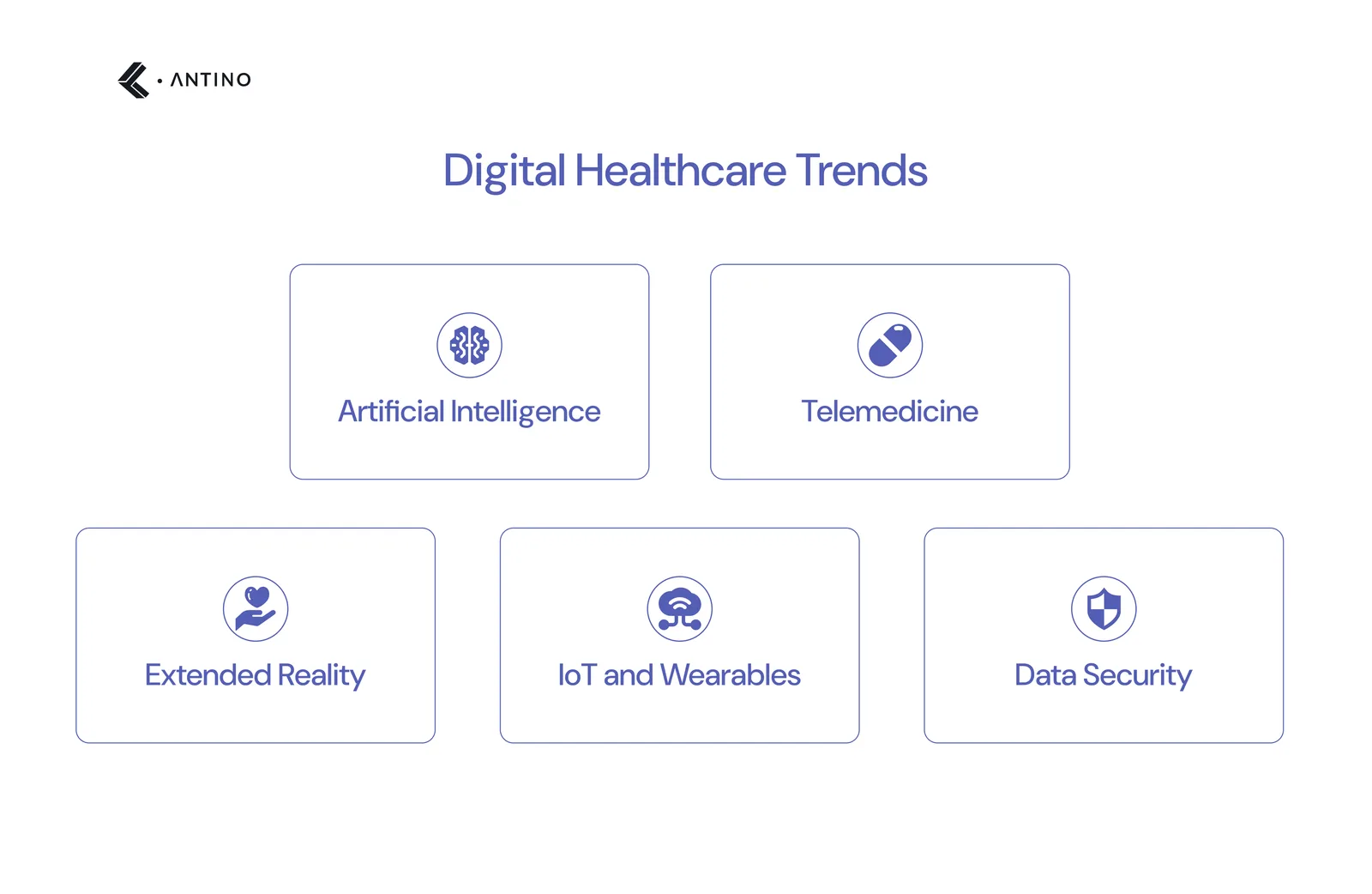
All this change has occurred due to the digital trends encircling the healthcare industry. Let’s have a look at the digital healthcare trends of tomorrow.
Trend #1: Artificial Intelligence
Did you know that artificial intelligence is one of the key healthcare digital transformation trends? According to a recent research report, the costs dedicated to AI and machine learning in the healthcare sector are expected to surpass 10.5% in 2024. Therefore, AI has the potential to benefit almost everything in healthcare, from communication with patients to assisting with surgeries and creating new pharmaceuticals. So let's explore some interesting AI use cases in healthcare together, shall we?
Healthcare Data Management
AI systems can be incredibly helpful in the healthcare industry. They can automate tasks like managing data, completing electronic health records, analyzing medical images, and even genomics. This can help healthcare providers improve their workflows, make more accurate diagnoses, and provide better care to patients.
With the rise of healthcare software modernization, EHR software like Epic and Allscripts have integrated AI into their platforms, which can help doctors create personalized treatment plans and improve patient engagement. By using AI to analyze patterns and trends in EHR data, healthcare providers can make better clinical decisions and achieve better treatment outcomes. It's amazing how technology can help us improve our overall health, don’t you agree?
AI In Diagnosis & Drug Discovery
AI technology is playing a crucial role in improving the drug development process. For example, predicting the 3D structures of proteins from their amino acid sequence is a complex task. But thanks to AI-powered technology like AlphaFold2, developed by DeepMind, researchers have achieved a major breakthrough in this field.
The latest version of AlphaFold uses a machine-learning approach that incorporates physical and biological knowledge about protein structure, making it even more accurate. And the best part is that it's openly available via Google Colab. What other ways do you think AI can benefit drug development?
AI In Mental Health
It's great to see that mental health solutions are gaining more attention in recent years. At Antino, we're proud to have worked on a therapy and wellness platform called Zenly. It's a platform that allows users to select the perfect playlist based on their mood or situation, or even try out some meditation or yoga to help them relax. Our team is always looking for new and innovative ways to improve mental health apps like Zenly, and we're currently researching how AI can add even more value.
Trend #2: Telemedicine
One of the most significant innovations has been the rise of telehealth. Healthcare providers have been leveraging the power of technology to connect with patients virtually, and the infrastructure supporting telemedicine has improved significantly as a result. Telehealth has become increasingly popular across various medical specialties, including primary care, mental health, dermatology, and pediatrics.
Although telehealth visits have decreased slightly since the peak of the pandemic, recent statistics suggest that the trend is here to stay. In fact, experts predict that the global telehealth market could reach a staggering $559.52 billion by 2027, with an impressive compound annual growth rate of 25.2%. Let’s have a look at all use cases of mobile health.
Mobile Health
mHealth is a rapidly evolving sector within healthcare that uses mobile devices to extend the reach of telemedicine solutions globally. In recent years, a new category of mHealth apps has emerged. These apps prioritize users in the health data equation, empowering them with greater control over their data. These healthcare mobile apps go a step further by focusing on user engagement in self-care and even offering rewards or payments to encourage users to use the mHealth app and contribute their healthcare-related data actively.
One such app that comes to mind is Stepler. It rewards users for being active by giving them points for every 1,000 steps they take. It's a great way to encourage a healthy lifestyle and to be rewarded for it!
Given the growing usage of mobile devices and mobile application development services, it's safe to say that mHealth applications will continue to grow in the coming years.
Complying With Regulations
One of the biggest challenges of telehealth is making sure that it complies with HIPAA regulations. During the pandemic, some restrictions were relaxed, but it's still really important for care providers to choose applications that meet healthcare industry standards for data storage and transmission.
If you're considering developing your own telehealth app or integrating with a third-party service like Zoom, it's crucial to make sure that it meets these standards for a smooth shift toward digital transformation.
Webrtc For Video Conferencing
Have you ever thought about creating a custom video-conferencing app for your healthcare business? Well, if you have, then you must know that a specialized solution is crucial to ensure that the app adheres to all the legal privacy requirements. And when it comes to telemedicine apps, one technology that you simply cannot overlook is WebRTC.
WebRTC is an open-source system that allows web browsers and mobile applications to connect, making it easier to transmit audio, video, and data. This technology is especially useful for implementing teleconferencing features, which is incredibly important for healthcare professionals who need to connect with their patients remotely.
Cloud Hosting And Data Storage
Storing data in many cloud storage services offers a reasonable level of security, but it may not align with government regulations concerning protected health information. That's why implementing HIPAA-compliant cloud hosting solutions is crucial to ensure the functionality and efficiency of any healthcare operation that deals with electronic health records (EHR). Alternatively, individuals may consider personal website hosting for simpler, non-regulated needs.
But that's not all. There are additional functionalities that could be of great benefit to your organization, such as security mechanisms, location services, appointment management, secure messaging, healthcare provider reviews, visit history, and integration with wearables.
In fact, some applications might require the storage of fitness data from consumer devices like Google Fit and Apple HealthKit. The ability to maintain these integrations securely and efficiently can greatly benefit both the patient and the healthcare provider.
At Antino, we specialize in HIPAA-compliant cross-platform Mobile and Web solutions that integrate patient-doctor interactions and data exchange. This kind of integration allows you to analyze and manage information on the scale of a hospital facility and integrate it with EHR.
Trend #3: Extended Reality
XR is an umbrella term that encompasses augmented reality (AR), virtual reality (VR), and mixed reality (MR). And did you know that XR is one of the incredibly innovative and beneficial digital trends in healthcare industry?
By using XR technologies, healthcare professionals can assist in surgeries, improve telehealth applications, and offer immersive training experiences. For example, medical students can practice surgical procedures in a VR environment before performing them on real patients, which can lead to better outcomes.
Similarly, AR can be used to overlay digital information in real-world environments, making it easier for healthcare professionals to visualize and understand complex medical information. And MR can combine the best of both worlds, allowing users to experience both virtual and real environments at the same time.
With XR technologies, the possibilities are endless. It's exciting to think about how these technologies can revolutionize the healthcare industry and improve patient outcomes. So, let’s take a look at some of the use cases of XR.
Augmented Reality And Mixed Reality In Healthcare
AR development services are helping healthcare providers offer remote consultations and telemedicine, which allows them to share visual information and guidance with patients in real-time. With AR-enabled devices, healthcare professionals can guide patients through specific actions or procedures remotely, offering support and expertise from afar.
AR is also proving to be beneficial in medical education. It enhances learning experiences for students and professionals by providing immersive simulations of medical procedures, anatomy, and physiology. For example, AR technology can be used to help nurses find veins to draw blood from. AccuVein uses AR to visualize veins more efficiently and easily.
In rehabilitation and physical therapy settings, AR is being used to create interactive and exciting exercises. By overlaying digital elements onto real-world environments, AR can inspire and guide patients throughout their rehabilitation journey, making it more engaging and improving overall outcomes.
Virtual Reality In Healthcare
VR is being used to train doctors and enhance their skills in various medical procedures. But it's not just for training purposes. In fact, VR is now being used as a form of therapy to help people overcome phobias like fear of heights or PTSD. Some companies like Osso VR and ImmersiveTouch are providing VR solutions to help surgeons sharpen their skills, and studies have shown that VR training is even better than traditional methods.
And it's not just for medical professionals. Maplewood Senior Living in Connecticut has implemented a VR therapy program to help the elderly unlock memories and improve their emotional well-being. Another interesting platform called InMotion's Corpus VR uses motion-enabled games to collect data during virtual exercises, which doctors can use to personalize and adjust therapy based on individual progress.
Trend #4: IoT and Wearables
Wearables and IoT technologies are becoming a more common part of our lives, and their potential in the healthcare industry has grown enormously. In fact, in 2020, Internet of Medical Things (IoMT) solutions accounted for about 30% of the total IoT market! That's pretty impressive, don't you think? With the IoMT market already valued at $144.23 billion and expected to grow at a CAGR of 20.4% from 2024 to 2030, we can see how much the healthcare industry is becoming more and more connected through these technologies.
Wearables
According to recent GWI data, many working-age internet users have a smart wrist device like a fitness tracker or smartwatch. But, did you also know that there are other types of wearables, like bio patches and smart hearing aids, that can have a similar impact on healthcare?
Bio patches can give doctors a better understanding of your vitals without the need for a smartwatch, while artificial intelligence can help improve the noise isolation of hearing aids. And if you're diabetic, you'll be happy to know that AI-based wearable apps can estimate BGL using data collected by non-invasive wearable devices, making it easier to manage your condition.
Other IoT Solutions
By connecting different devices and systems & IoT apps, one of the fastest-growing digital healthcare trends, IoT can streamline processes and make them more efficient. For instance, hospitals can use IoT-enabled asset tracking systems to monitor the location and status of medical equipment, making inventory management a breeze. Plus, IoT can automate temperature and humidity monitoring, ensuring that medications and specimens are stored optimally.
IoT also has other applications in hospitals, such as wearable devices and smart hospital beds equipped with sensors. These devices can detect falls or unusual patient movements and alert healthcare providers promptly. In emergencies, IoT-enabled response systems play a critical role in locating and tracking patients for swift assistance. Have you heard of the IntelliVue Guardian solution? It uses wearable biosensors and IoT connectivity to continuously monitor patients’ vital signs and alert healthcare providers to any abnormalities or signs of deterioration.
Trend #5: Data Security
In 2023, there were 725 data breaches reported to OCR, and over 133 million records were exposed or impermissibly disclosed. For instance, Postmeds, a company that fulfills mail-order prescriptions for pharmacies, suffered a massive data breach that affected more than 2.3 million individuals.
To avoid costly data breaches, it's crucial to ensure your organization is HIPAA compliant. If you serve patients internationally, it's also a good idea to look into the regulations of the General Data Protection Regulation (GDPR) in the European Union.
While there are many compliant video conferencing software options available, sometimes a more tailored solution is necessary, especially if the existing data infrastructure doesn't integrate seamlessly with the available options. Additionally, if you plan to use an established system for exchanging electronic Protected Health Information (ePHI) with patients through third-party software, you must navigate the challenge of obtaining a business associate exception with the vendor, which can be intricate and cumbersome.
Even with these efforts, there is no guarantee that a third-party program can entirely safeguard patient data. Moreover, ensuring information security during remote doctor calls presents challenges, and transmitting ePHI data in structured formats is imperative. These calls can complicate the process.
Facial recognition technology has become one of the most popular digital health solutions, thanks to its convenience. It ensures authorized access of medical staff members to handheld devices or workstations.

Benefits of Digital Transformation in Healthcare
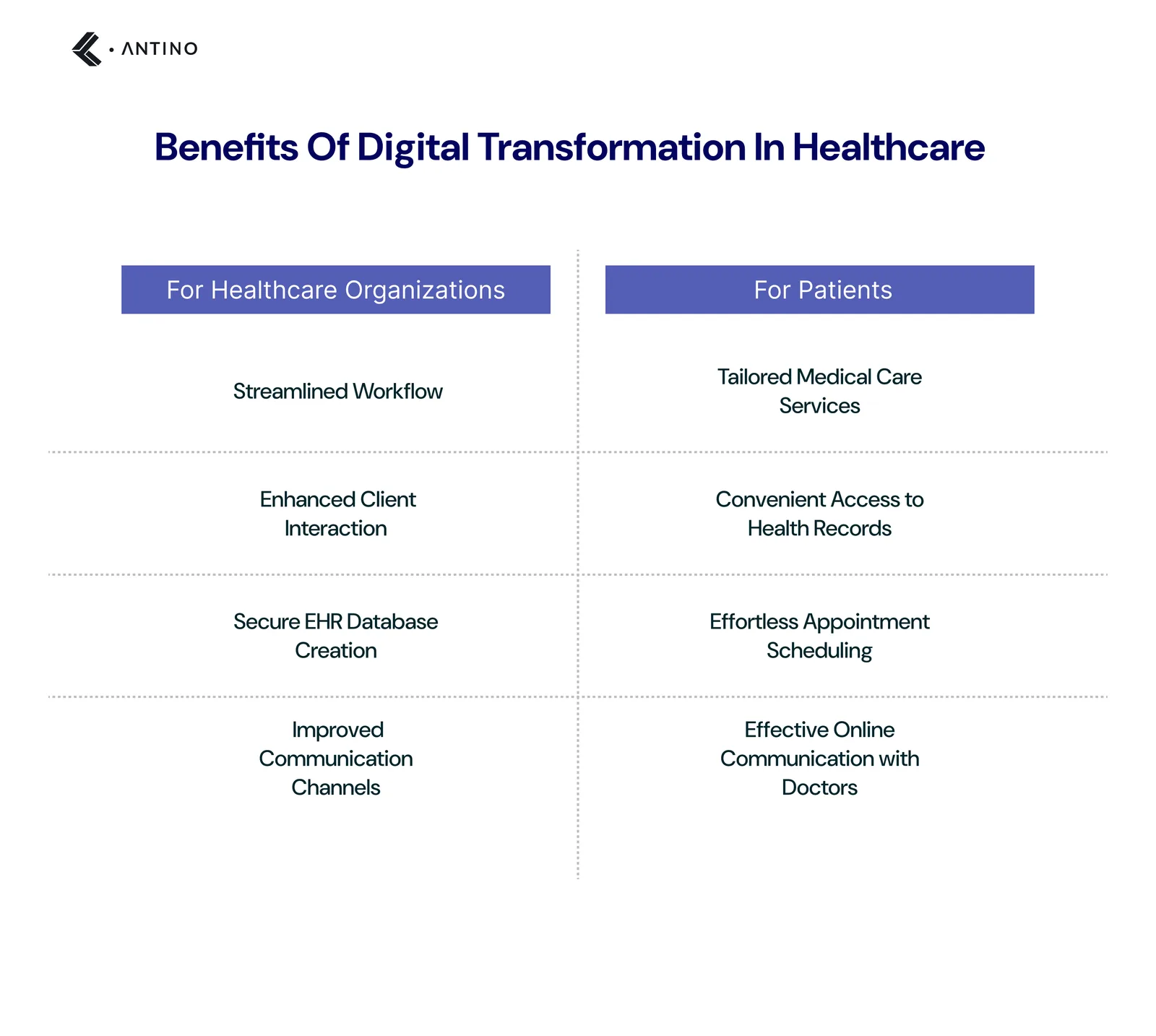
When it comes to technologies, embracing digital transformation in healthcare brings forth a host of benefits for both healthcare organizations and patients alike. It's an exciting shift that enhances how we deliver care and interact with patients. So, let's dig into the advantages it offers.
Benefits of Digital Transformation for Healthcare Organizations
As you may already know, technology is transforming the healthcare industry. One way it's doing this is by helping healthcare organizations create interconnected systems that benefit both patients and medical professionals. For example, there's Software as a Medical Device (SaMD), which helps healthcare providers deliver more efficient and accurate treatment and services. Overall, this digital transformation in health is helping healthcare firms improve their operations and better serve their patients.
Streamlined Workflow
Using digital healthcare software makes things smoother. It cuts down on paperwork, which means less time spent on administrative tasks. Plus, it makes accessing accurate patient data quick and easy, saving time during examinations. Healthcare providers can automate several back-office functions, including appointment scheduling, claims processing, and specialized services such as dental billing service management, helping organizations improve revenue cycle efficiency and reduce administrative overhead.
Enhanced Client Interaction
Thanks to digital upgrades, healthcare providers can now communicate better with patients. Whether it's through chats or video calls, patients can connect with their healthcare team more effectively, making it easier to ask questions and get the support they need.
Secure EHR Database Creation
Digital platforms like the EMH (Electronic Medical Records) system help create safe and encrypted databases of patient health records. This means patient data is protected and can be securely shared with other healthcare providers when needed. If you're looking to set up such a system, companies like Radixweb specialize in developing Electronic Health Record (EHR) software to get you started.
Improved Communication Channels
With digital tools, healthcare organizations can improve communication within their teams. This leads to more accurate patient diagnoses, faster data sharing, and better internal coordination. Enhanced communication means healthcare providers can work together seamlessly, ultimately improving patient care and strengthening nursing care through better coordination among medical teams.
Benefits of Digital Transformation in Healthcare for Patients
With the digital transition, patients now have more options than just in-person appointments. There are actually several advantages to this digital shift. Would you like us to walk you through the list of benefits so you can better understand them? Let’s begin.
Tailored Medical Care Services
Digital healthcare allows for personalized diagnosis and treatment, catering to individual patient needs. This means healthcare providers can pinpoint specific health issues more accurately and offer targeted treatment plans for better outcomes. Additionally, the development of custom software tailored to healthcare needs signals a promising future, emphasizing the delivery of exceptional patient care through innovative technology.
Convenient Access to Health Records
Patients can access comprehensive health analyses and manage their personal health information easily through online healthcare applications. With just a few clicks, patients can review their health metrics, track progress, and stay informed about their health status. This easy access empowers patients to take an active role in their healthcare journey, leading to better-informed decisions and improved health outcomes.
Effortless Appointment Scheduling
The digital innovation in healthcare simplifies the process of booking appointments for patients. Through digital platforms, patients can choose the most convenient date and time for their medical visits without the hassle of traditional phone calls or in-person scheduling. This flexibility not only saves time for patients but also enhances overall convenience and satisfaction with healthcare services.
Effective Online Communication with Doctors
Patients now have the option to communicate with healthcare professionals online, whether through chat or video calls. This allows for swift and convenient access to professional assistance, including detailed prescriptions and treatment plans. Patients can receive expert guidance and support from their doctors without the need for physical appointments, promoting timely interventions and continuity of care.
These advantages highlight the transformative potential of digital healthcare solutions, benefiting both healthcare professionals and patients alike by improving accessibility, efficiency, and quality of care delivery.
Some Real Life Digital Innovations in Healthcare
Here are some real-life examples of digital innovation in healthcare, featuring prominent companies.
Teladoc Health
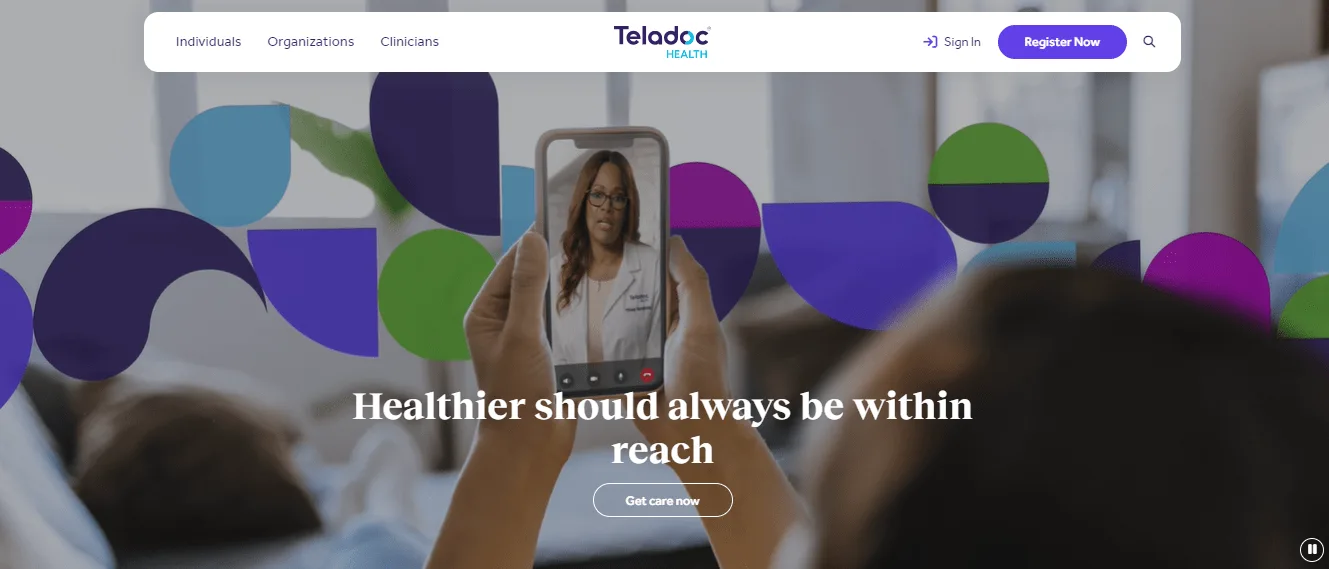
Teladoc Health offers virtual healthcare services, allowing patients to consult with doctors remotely through video calls or chats. This digital transformation enables patients to receive timely medical advice and prescriptions without the need for in-person visits, improving access to healthcare services and reducing unnecessary hospital visits.
Zocdoc
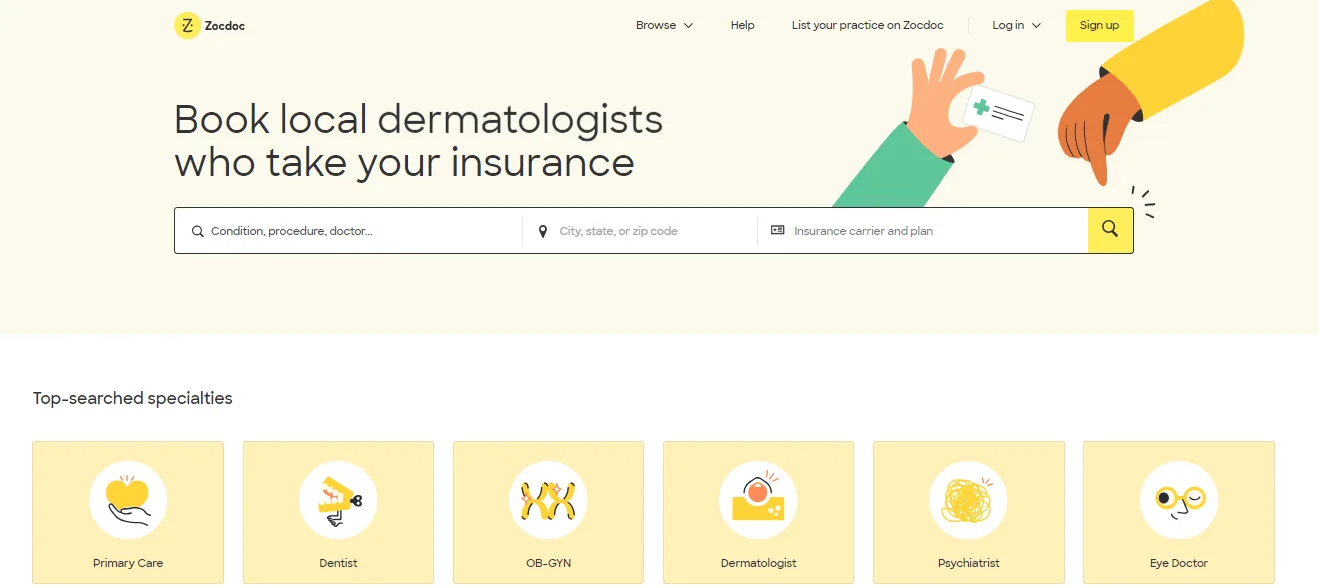
Zocdoc is a digital platform that simplifies appointment scheduling for patients by allowing them to book appointments with healthcare providers online. This digital transformation makes it easier for patients to find and schedule appointments at their convenience, reducing wait times and enhancing overall patient experience.
Fitbit
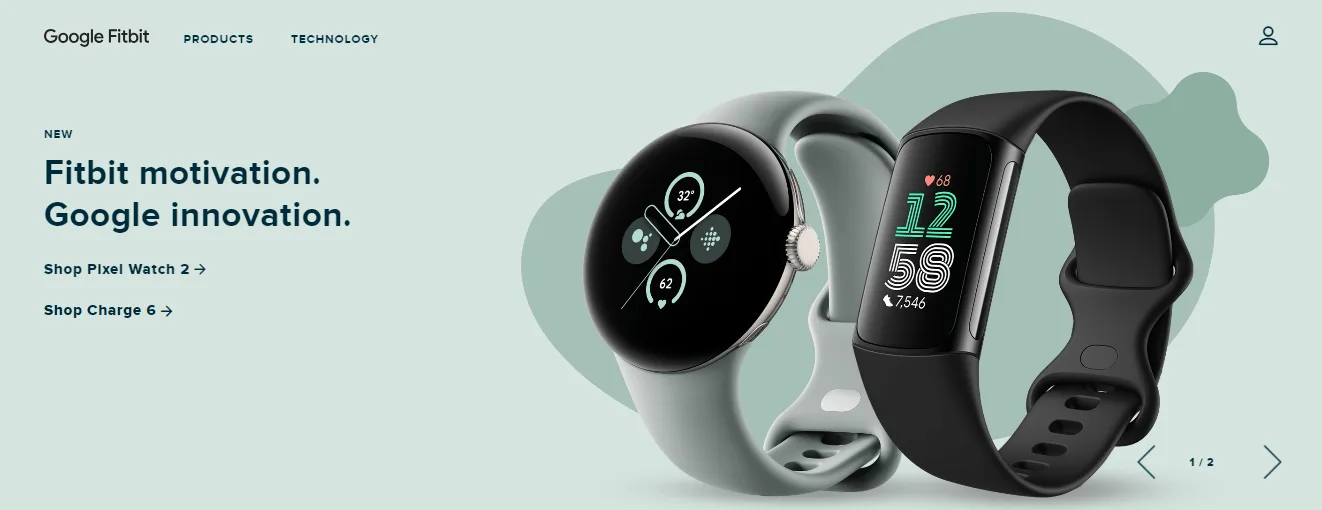
Fitbit is known for its wearable fitness trackers, but it has also made strides in digital health through its Fitbit Premium service. This subscription-based platform offers personalized health insights, coaching, and guidance based on users' activity, sleep, and nutrition data, empowering individuals to take control of their health and well-being.
Practo
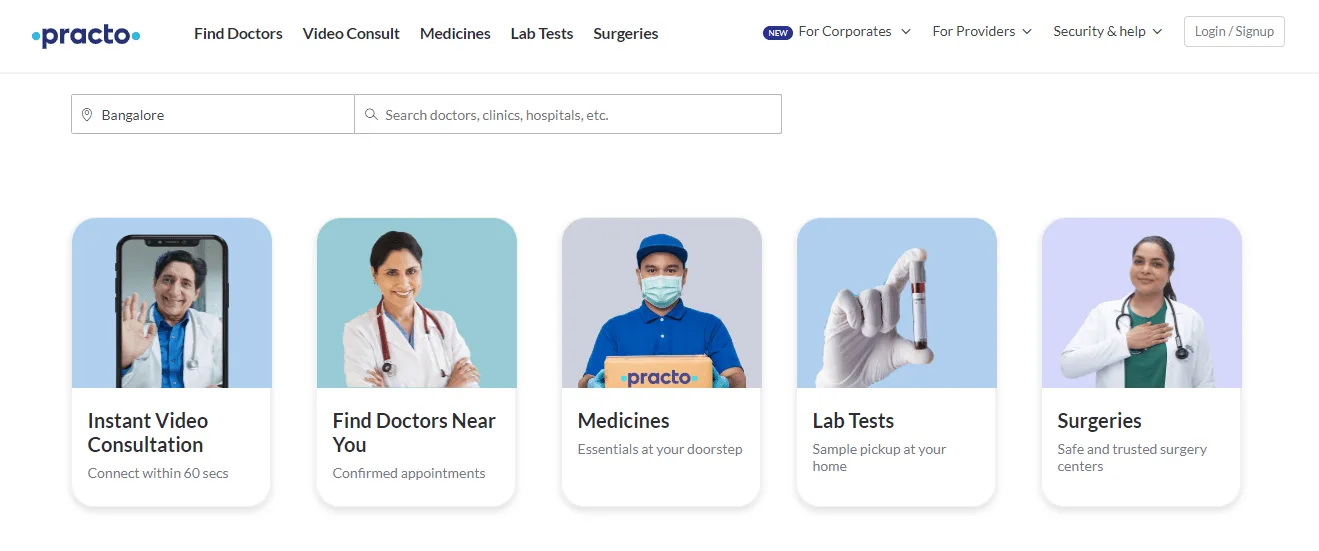
Practo is a leading Indian healthcare platform that offers a range of digital healthcare services, including online doctor consultations, appointment booking, and medical record management. Their digital solutions connect patients with healthcare providers, making healthcare services more accessible and convenient.
Portea Medical
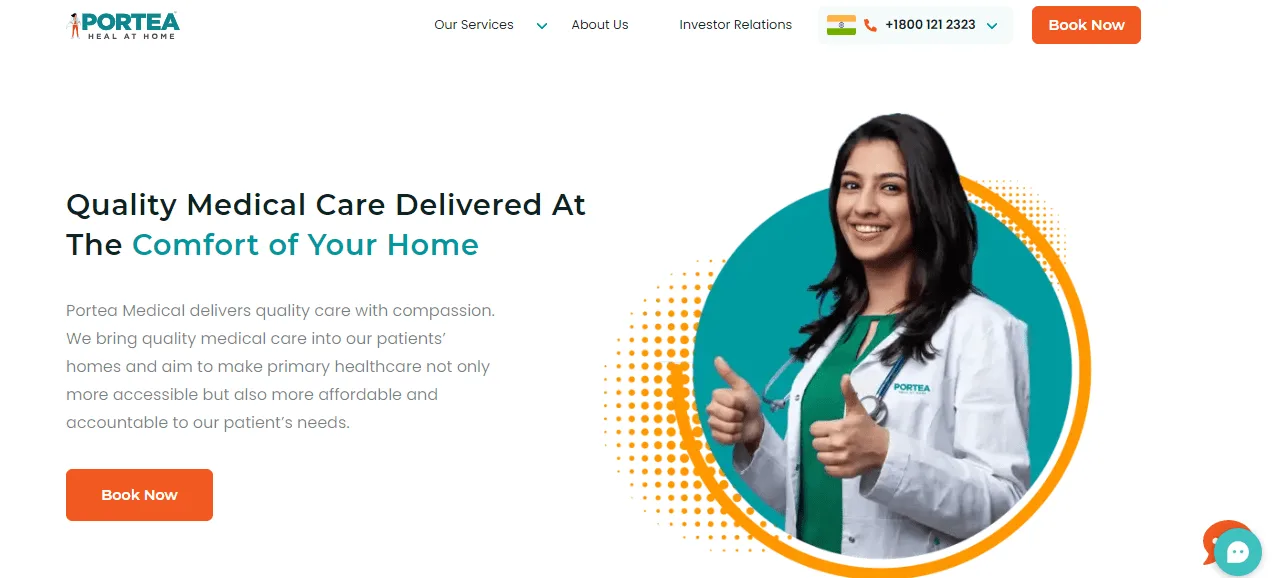
Portea Medical is India's largest home healthcare provider, offering a variety of digital healthcare services such as remote consultations, home visits by healthcare professionals, and remote patient monitoring. Their digital transformation initiatives enable patients to receive high-quality healthcare services in the comfort of their homes, improving access to care, especially for elderly or immobile patients.
NetMeds

NetMeds is an online pharmacy ordering application that offers a wide range of pharmaceutical products and healthcare services through its digital platform. Patients can order medicines online, upload prescriptions, and receive doorstep delivery of medications. NetMeds' digital transformation initiatives make it easier for patients to access essential medications, especially for those with chronic conditions or mobility issues.
These examples illustrate how digital transformation is revolutionizing healthcare delivery, improving accessibility, efficiency, and patient outcomes through innovative technology solutions offered by leading companies in the industry.
Challenges of Technology in Healthcare
Although digital transformation is making significant progress in the healthcare industry, it still faces a few challenges that hinder its adoption. One of the main obstacles is the slow pace at which healthcare professionals and organizations are adapting to new technology.
It takes time to become familiar with new digital solutions, and some healthcare providers may be hesitant to adopt new technology due to concerns about privacy, security, and data protection. Therefore, it's important to address these concerns and provide adequate training and support to ensure a successful digital healthcare transformation.
Security Concerns
Ensuring the security of healthcare applications is paramount due to the sensitive nature of patient health data. Strict cryptographic security measures dictate encryption protocols for data transmission and storage. Compliance with telehealth encryption standards and robust security measures from third-party platforms is essential to protect patient confidentiality.
Integration Challenges and Cost Considerations
Integrating modern telehealth solutions like WebRTC can be challenging, especially for organizations with legacy systems. Compatibility issues and the need for proprietary protocols increase infrastructure costs and maintenance expenses. Additionally, regulatory compliance and data privacy laws add complexity and cost to technology adoption.
Data Privacy and Regulatory Compliance
Privacy laws and regulations, such as HIPAA in the United States and EU directives on cross-border healthcare, impose strict requirements on patient data protection. Compliance with these regulations is crucial for technologies like WebRTC, which handle sensitive patient information.
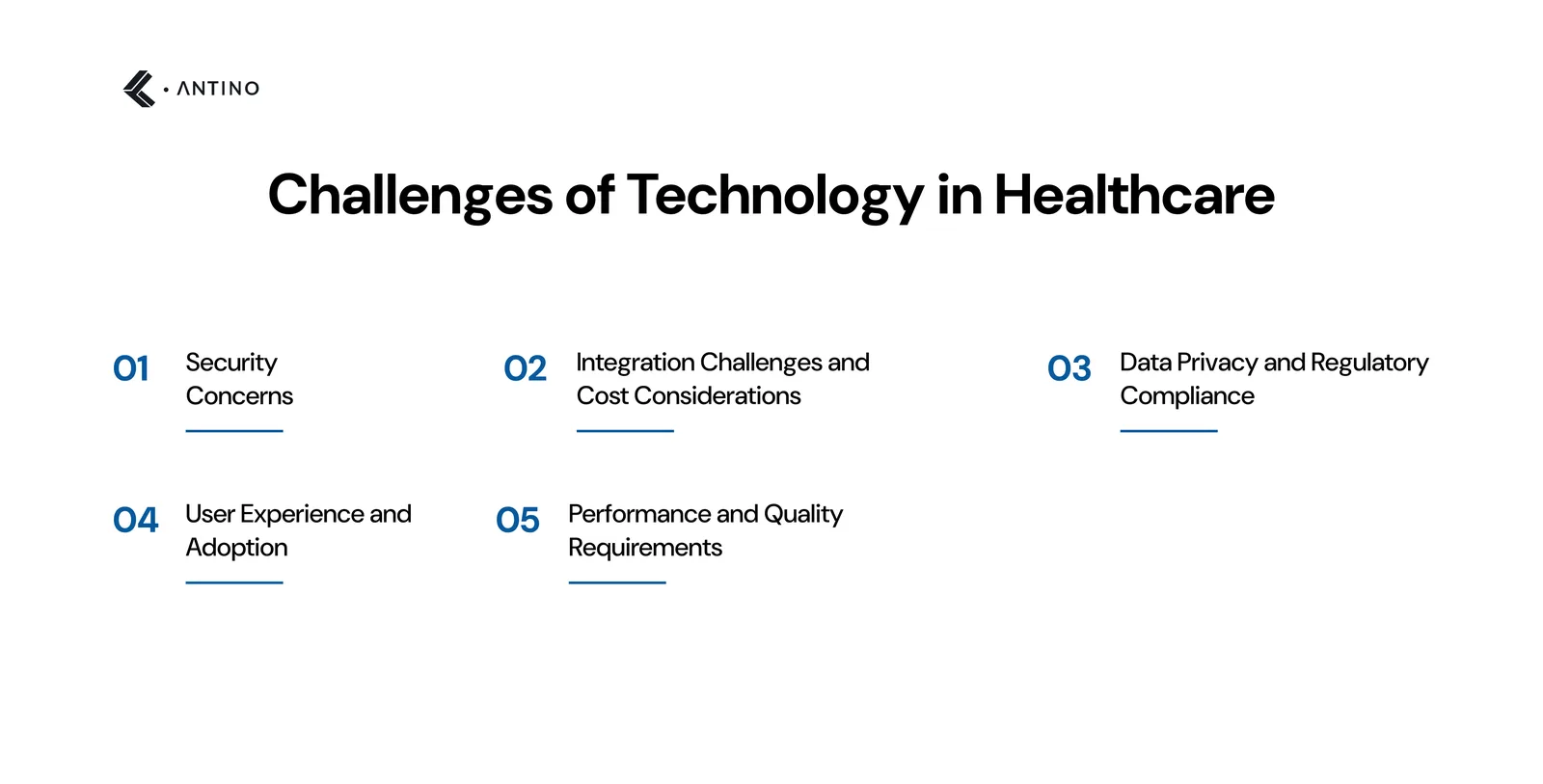
User Experience and Adoption
User experience plays a significant role in technology adoption in healthcare. Healthcare professionals and patients alike are hesitant to adopt new technologies if they disrupt existing workflows or lack user-friendly interfaces. New technologies must demonstrate clear value by improving efficiency and satisfaction.
Performance and Quality Requirements
Real-time communication in healthcare demands high-performance solutions to ensure reliable access to critical data and services. For example, virtual home-care services for chronically ill patients require high-quality video, audio, and data monitoring capabilities. Third-party services can simplify telehealth implementation and deliver reliable and secure solutions.
As you may already be aware, digitization is the incorporation of digital technologies in healthcare, such as digital health technology systems, which work towards improving patients' experiences and enhancing the efficiency of healthcare providers. However, it's not only about the advantages that come with it, but it also demands a cultural shift that entails adopting new business models and ways of thinking to provide users with innovative solutions.
See how we helped HCL Healthcare with healthcare transformation solutions?
Through a strategic partnership with HCL Healthcare, a prominent leader in preventive health and wellness solutions in India, our team undertook a pivotal healthcare digital transformation project aimed at creating a comprehensive website and robust software for healthcare providers.
This collaboration was focused on meeting the unique requirements of HCL Healthcare's extensive customer base, positioning the organization as a leader in digital health solutions in India.
Technological Foundations
The technological framework for this endeavor was built upon an MERN stack, incorporating React.js for dynamic frontend development, Node.js for resilient backend infrastructure, MongoDB for efficient database management, and AWS for secure hosting and seamless cloud services integration.
Challenges Addressed by HCL Healthcare
The project presented a range of challenges, including onboarding multiple laboratory vendors, ensuring user-centric geolocation services for lab proximity, and designing adaptable bundle packages. Operational efficiency, spanning user interactions to backend processes, emerged as a key focus.
Solutions Implemented
Providing Geolocation Solutions
To facilitate smooth collaboration, we integrated APIs to ensure compatibility across diverse systems, streamlining the appointment booking process. Geolocation services were strategically deployed, enabling users to easily locate nearby labs based on pin codes or addresses.
Developing Admin Panel
The development of a comprehensive admin panel provided real-time insights into platform activities, enhancing operational oversight. Regular training sessions were conducted for the in-house team to keep them well-versed with the platform's features.
Streamlining Payment Transactions
In addressing payment transactions, we established a strategic partnership with Paytm and integrated secure payment APIs. This facilitated seamless transactions while ensuring strict compliance with data protection standards through the implementation of robust encryption protocols.
Project Outcome
The collaborative efforts resulted in the successful development of a user-friendly website and a robust healthcare software solution. This initiative empowered HCL Healthcare to effectively address the diverse needs of its customer base, establishing a seamless and comprehensive healthcare experience.
How can Antino help you with healthcare transformation solutions?
It's fascinating to see how technology is revolutionizing the healthcare industry. As a digital transformation service company, we understand that digital transformation is a complex process that requires a complete overhaul of your existing processes.
But don't worry, if you're looking for a reliable digital innovation solutions partner to lead your digital healthcare strategy, Antino is a leading provider of digital healthcare transformation services. Our team of dedicated developers and cutting-edge technologies can help you drive the ultimate digital transformation for your healthcare business.
So, if you're interested in using the power of digital healthcare solutions to improve your operations and patient outcomes, have a word with our experts for a brief discussion!
FAQs
1. What is the role of digitalization in hospitals?
Digitalization in hospitals enhances efficiency by streamlining processes and improving patient care through integrated digital systems.
2. What are the 5 aspects of digital transformation?
The five aspects of digital transformation include automation, data analytics, cloud computing, artificial intelligence, and IoT integration.
3. What are the objectives of digital transformation in healthcare?
Objectives of digital transformation in healthcare encompass enhancing patient outcomes, optimizing operational efficiency, improving data security, fostering innovation, and facilitating remote healthcare delivery.
4. What are the digital services for healthcare?
Digital healthcare services encompass telemedicine, electronic health records (EHR), remote patient monitoring, healthcare apps, and AI-driven diagnostics.