
It's not even 9 AM, and the day's already started. A customer can't reset their password. The product team just found a bug in the app. A partner bank needs data synced ASAP. Oh, and the CEO wants to know when the mobile app can do instant loans.
Sounds about right?
Yeah, for banking leaders, this is just another Tuesday. Customers want everything to be easy and digital. Stakeholders want things done well, safely, and by the book. And nobody has time for old-school stuff.
So, what makes a banking app great?
Can your tech handle more users and keep up with what they want?
Can your app deal with lots of activity without slowing down or getting hacked?
Are you sure you're following all the rules?
It all comes down to how your mobile banking app is built, run, and updated.
In this blog post, we'll go over what's really needed for a modern mobile banking app development, what features to have, what tech to use, what rules to follow, and how much it'll all cost. Whether you're fixing up what you have or starting from scratch, this guide should give you a good idea of what to do.
But why are digital wallets eating the banking applications?
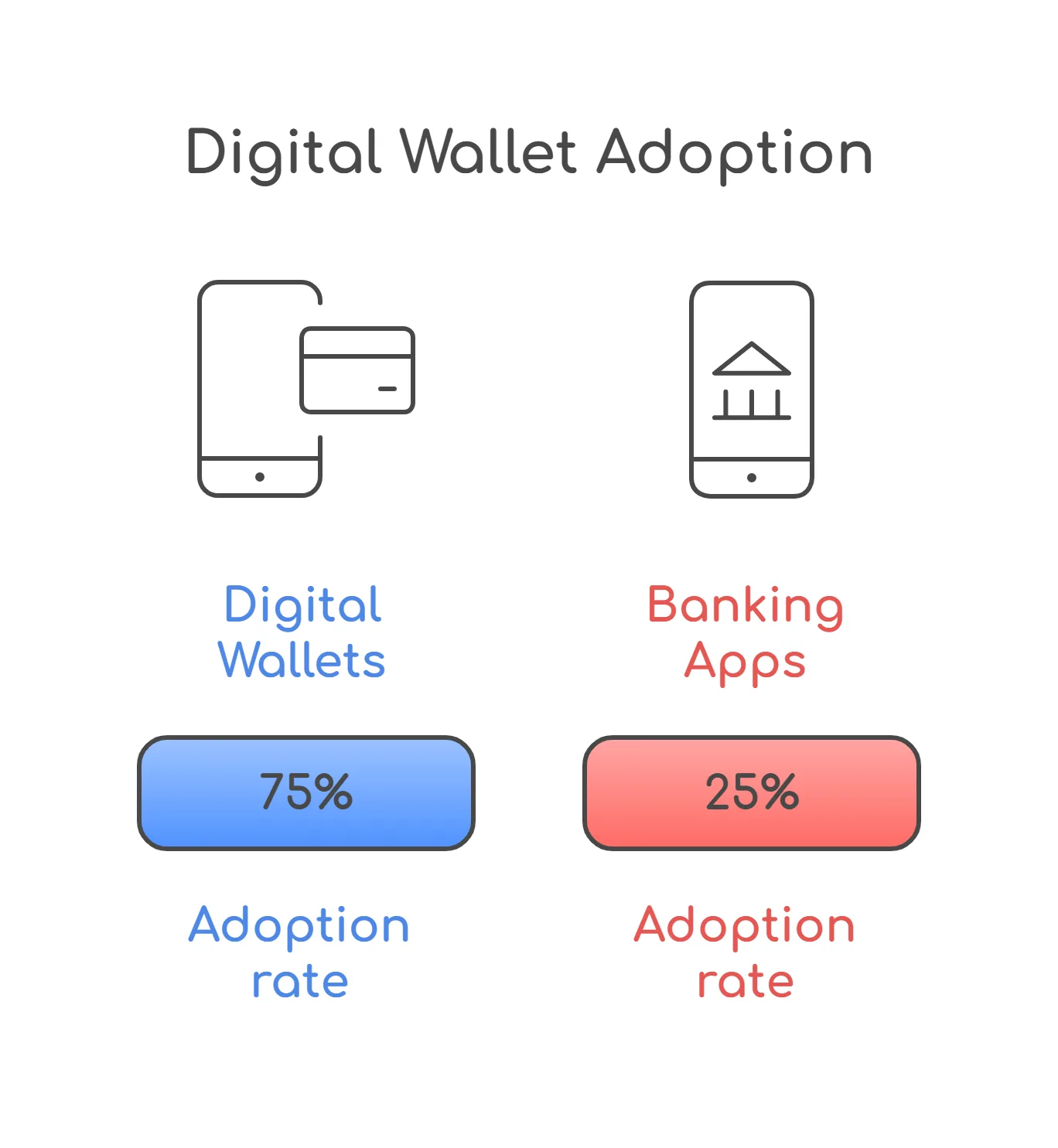
Banking is changing fast, and it might look totally different soon. By 2026, lots of people, over half the world, will probably use digital wallets. That'll change how we save, pay, and send cash all over. Ewallets are really changing, so regular banks have to think hard about what to do. Fintech keeps messing things up, so banks need to figure things out to stick around and not get left behind.
Digital wallets are changing the game for retail banks, bringing both good and bad news. Here's what's shaking things up:
1. Less usage of cash and cards
People are using less cash, and even cards are getting beaten by digital wallets. Banks need to up their digital game and rethink how they make money from cards, ATMs, and branches.
2. Lower fees
Digital wallets are taking over how money moves, so people don't need bank cards as much. This means banks are making less money from transaction fees, which is a big deal.
3. Competition from tech companies
Big tech companies are moving into finance and making the market more competitive. They're offering finance tools that are drawing people away from banks, who now need to come up with new ideas or get left behind.
Well, if you want to make mobile banking the next big thing, then you need to buckle up. It doesn’t matter if you create a mobile banking app; what matters is how quickly you can get one made with the right mobile banking app development services.
So, if you’re considering developing a mobile banking application, then have a look at the stats first…
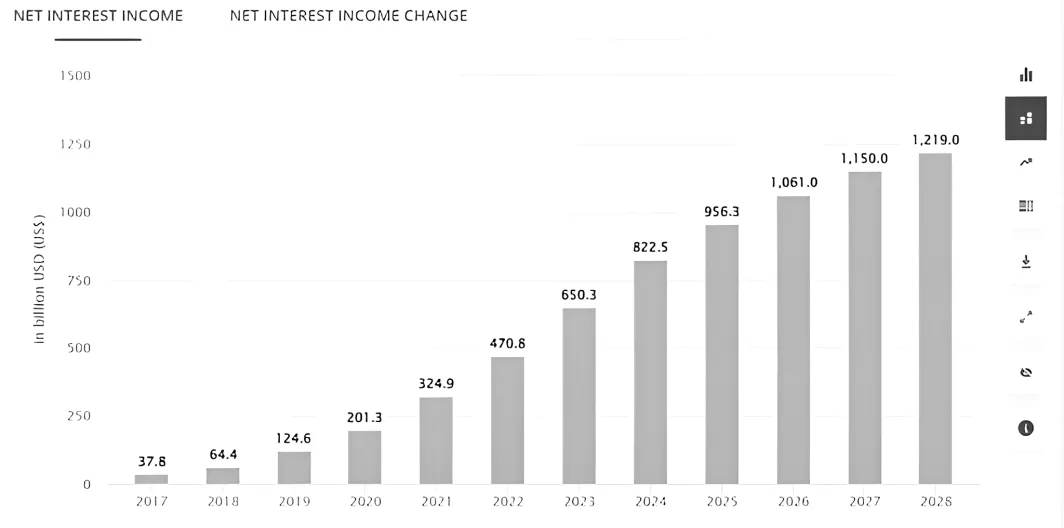
- Statista says digital banking is gonna keep getting bigger for the next five years. They think digital banks everywhere will make $1.61 trillion in net interest in 2025. And it's expected to keep growing by about 6.8% each year from 2025 to 2029, hitting $2.09 trillion in 2029.
- Right now, there are 1.75 billion digital banking accounts that handle around $1.4 trillion each year, which breaks down to $2.7 million every minute.
- In the US, about 1,646 brick-and-mortar bank branches have shut down on average each year since 2018, hinting at the shift to online banking.
- Again, there are 1.75 billion digital banking accounts processing about $1.4 trillion per year, or $2.7 million per minute.
- Also, more than 76% of American customers use mobile banking apps.
- Banks that go digital can see a 20%-40% drop in their operating costs, mostly because of automation, better processes, and not needing as many physical locations.
More and more people are using digital banking because they're using tech a lot more and just prefer doing their banking online. Today's digital banks are jumping on this, giving folks quick and easy ways to bank on their phones and computers.
Why should your Mobile App Development be like a digital fintech product?
For top execs, a mobile app isn't just another way to connect with people because it's key to how your whole business works. If you're up against new finance tech companies that move fast, the old way of making apps just won't work anymore.
So, are you just making an app, or are you building a real product?
These finance tech companies treat every little change in their apps like it’s part of growing their whole business. They're all about making quick changes, keeping users happy, building in the rules from the start, and being able to handle growth without problems. It's not just about coding; it's how they plan things.
If your app isn't as sharp, quick, and focused on customers, you're not just lagging; you're in danger.
Here’s why you should be making apps like a finance tech company…
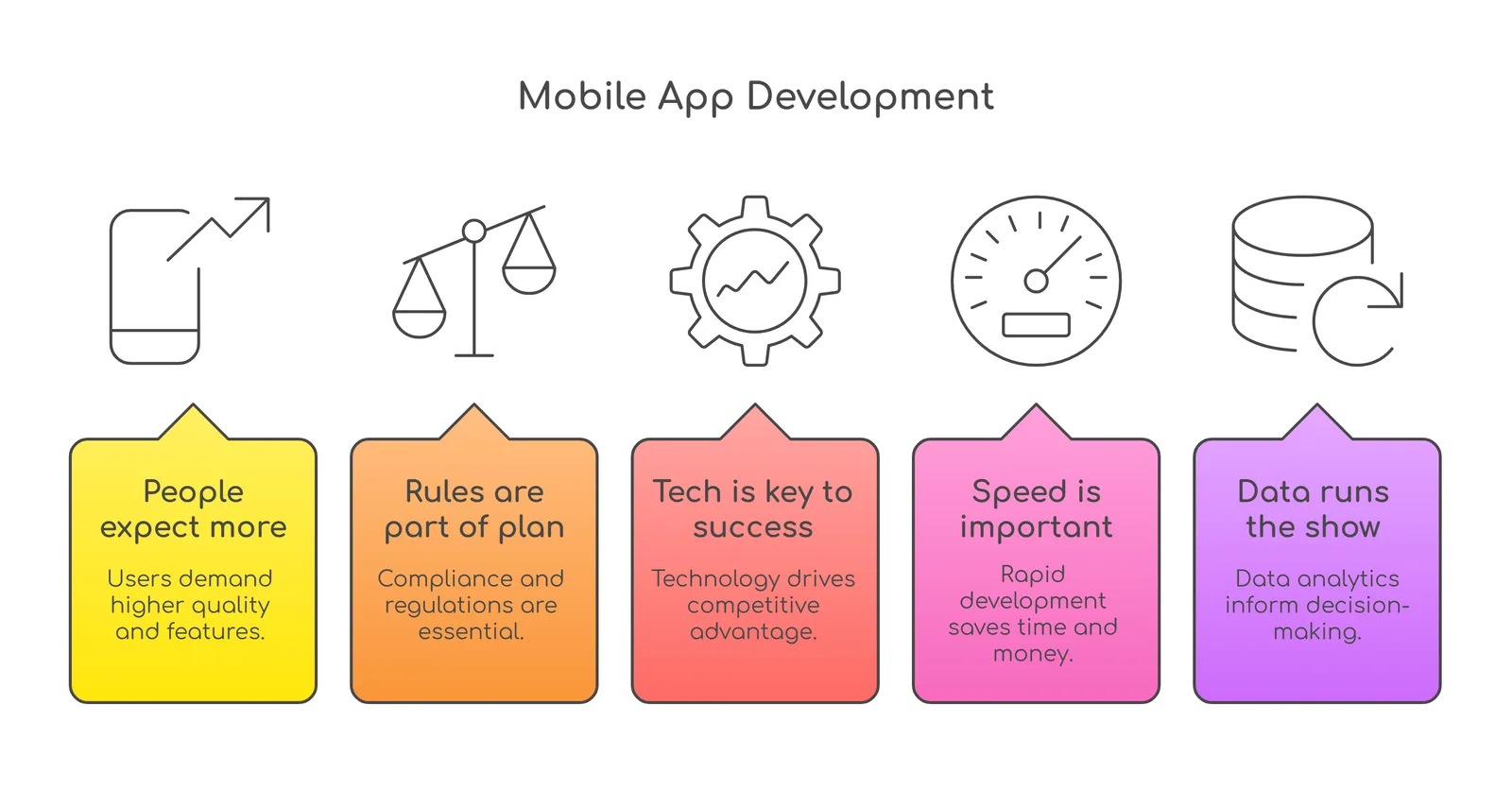
1. People expect more now
Whether you're a bank, insurance company, or payment system, people are comparing you to the quickest, easiest app they've ever used, usually made by a finance tech company. If your app is slow, confusing, or takes too long to set up, people will stop trusting you fast.
2. Rules are part of the plan
Finance tech companies think about the rules as they build. Right from the start. If your app doesn't follow the rules from the beginning, fixing it for checks and changes will cost you a lot more in time, money, and your good name.
3. Your tech is now key to getting ahead
Finance tech companies use tech that can be put together in blocks, works on the cloud, and connects easily. They don't wait for updates every three months. They change as fast as the business needs. Can your team do that?
4. Speed is important because time is money
Getting new things out in weeks, not months, gives you an advantage. Delays aren't just how long it takes to make it; they're missed chances to make money.
5. Data is what runs the show
Finance tech companies don't just grab data; they use it. Every time someone does something in the app, it helps make things personal, figure out risks, and make business choices. Your app should do the same.
If you’re still making apps like it’s the old days, project-by-project, thinking about features first and rules after you're running out of time. It's time to change how you think. Now, your banking mobile app is the whole business.
Here’s a quick guide on how to build a mobile banking app
Making a mobile banking app? It's not just about the looks, it's about making sure people trust it, feel safe using it, and have a smooth experience every time they tap. Here’s how to get started…
1. Figure Out What You Want and What Rules to Follow
Before coding, chat with everyone involved to nail down what you want the app to do.
Is it a full-on digital bank or just an extra app for your bank?
What rules do you have to follow? Think of local, national, maybe global rules.
This sets the stage for everything else.
2. Security First, Always
Security isn't just something you add on; it's key. So, it is better to use:
- Encryption from start to finish
- Fingerprints or face ID
- Double check every login
- Watch out for fraud as it happens
- Also, keep data safe and stick to rules like PCI DSS, GDPR, or rules from your region's regulators.
3. Pick the Right Tools
Go for tech that can grow with you, is up-to-date, and keeps things secure.
Frontend: Flutter, React Native, Kotlin, Swift
Backend: Node.js, Java, Python, .NET
Cloud: AWS, Azure, or Google Cloud with automatic updates and Docker, Kubernetes
4. Keep It Simple and Fast
The app should be easy to use without any headaches. Aim for:
- Quick and easy sign-up
- A clear view of balances and transactions
- Simple to get around
- Easy to use for everyone
A clean look builds trust and keeps users coming back.
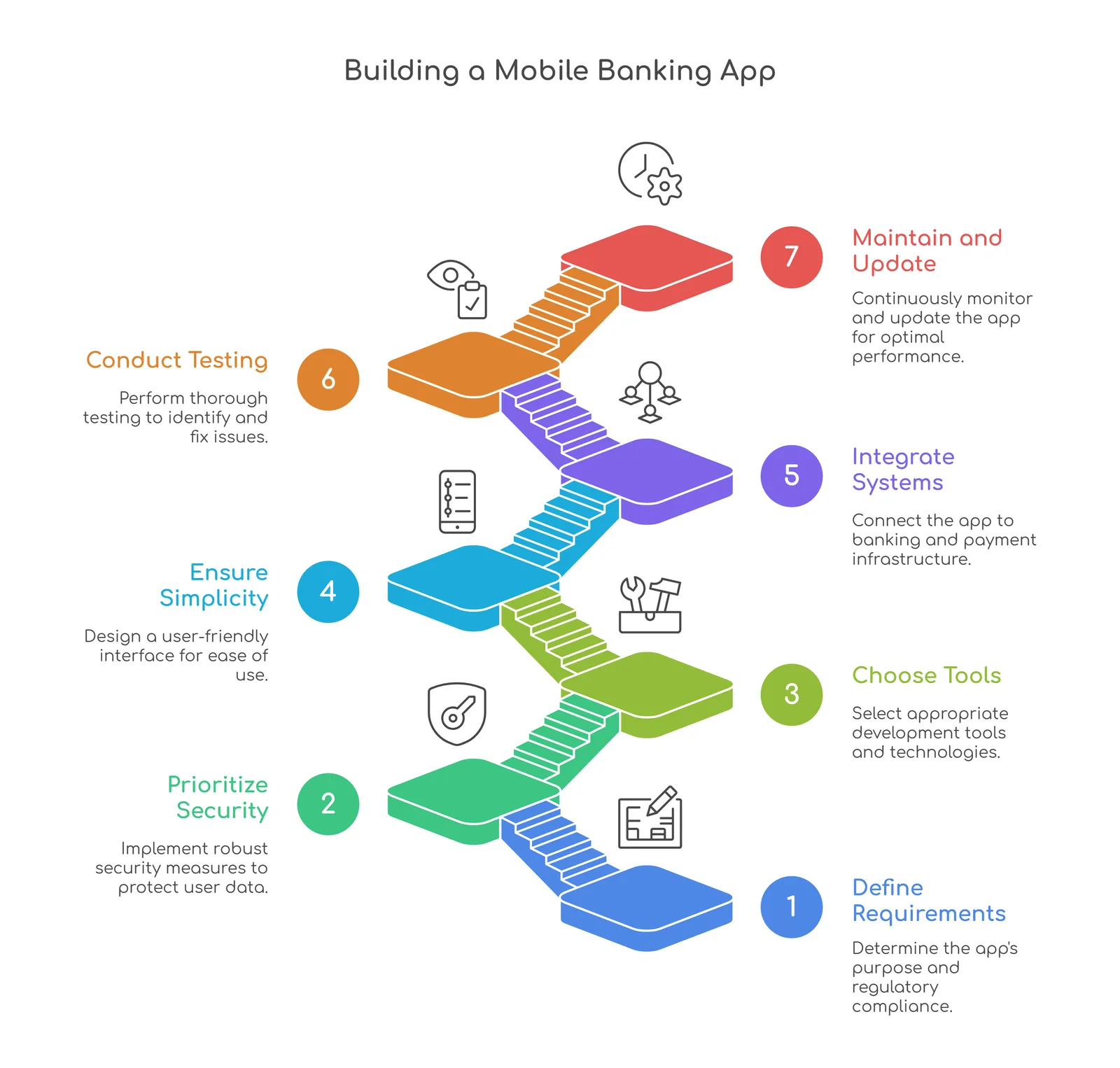
5. Connect to Your Bank and Payment Systems
Make sure the app works well with:
- Your main banking systems
- Payment options like UPI, cards, or bank transfers
- Services that check IDs and prevent money laundering
- Notification through SMS, push, or email
Also, APIs should be secure, fast, and easy to understand.
6. Do thorough testing
Testing isn’t just before launch, so keep it going. Do:
- Make sure everything works as it should.
- Check how it handles lots of users.
- Test for security holes.
- Get real users to try it out.
7. Keep Watching and Updating
Your app needs to keep up with what people want and what the rules say. Have:
- Tools to keep an eye on things (like Firebase, New Relic)
- A way for users to give feedback
- Frequent updates and fixes
- A plan for adding new stuff
All in all, a top-notch mobile banking app should feel reliable, safe, and easy to use. In today’s digital world, that feeling is super important, which can not be overlooked at any cost
What’s the cost of mobile banking app development?
Building a mobile banking app? Well, there's no set price. What it costs really depends on what you want it to do, what features it has, and how secure it needs to be.
Here's what affects the price:
- How complex the app is (basic banking or a full digital bank)
- How secure it needs to be, and what rules it needs to follow
- How good the design and user experience are
- What other services it connects to (like KYC, UPI, or core banking APIs)
- Which platform you want it on (iOS, Android, or both)
- The experience and location of the team building it
To give you a general idea, here’s a rough cost breakdown depending on the kind of mobile banking app you're going for.
Mobile banking app development cost comparison
| Feature / Parameter | Simple App | Complex App | Advanced App |
| Estimated Cost | $30,000 - $60,000 | $60,000 - $150,000 | $150,000 - $300,000+ |
| Development Time | 3 – 5 months | 6 – 9 months | 9 – 12+ months |
| Core Features | Balance check, transactions, basic KYC | Fund transfers, bill payments, notifications | Personal finance tools, analytics, investments |
| UI/UX Design | Basic, template-based | Customized, better user flow | High-end UI/UX with micro-interactions |
| Security Features | Basic encryption, 2FA | Biometric login, fraud alerts | Advanced threat detection, AI fraud analysis |
| Compliance & Regulations | Local | Regional | Global (e.g., GDPR, PCI DSS, RBI) |
| Third-party Integrations | Minimal (1-2) | Moderate (3-5) | Extensive (6+ incl. AI/ML APIs) |
| Platform | iOS or Android | iOS + Android | Cross-platform + Web |
| Post-launch Support | 1-2 months | 3-6 months | 6–12 months ongoing DevOps |
Thinking of building a banking app that's secure and can grow as needed? Think of it as a real investment. Starting small and growing with your users makes sense, but nailing the basics like security and following the rules will save you a ton of money later.
Compliance & security considerations while considering mobile banking application development
Alright, so security and following the rules aren't just things to tick off when you're making a mobile banking app. They're super important for keeping customers happy and making sure your app lasts. Every place has different rules about data protection, and what people expect for security. So, before you build your app in different countries, here's what you should know…
Middle East (UAE and GCC Countries)
The Middle East is getting into online banking fast, and the people in charge are making rules for it.
What to keep in mind:
- The UAE Central Bank has rules for online payments and open banking.
- ADGM (Abu Dhabi Global Market) and DIFC (Dubai World Trade Centre) have rules for techy finance companies and online banks.
- The UAE's Personal Data Protection Law (PDPL) says you need permission to use people's info and keep it safe.
Security musts:
- Lock up all user and payment info with strong encryption (AES-256).
- Use multi-factor authentication (MFA) and fingerprints to log in.
- Keep your data safe in the cloud (ideally in the area or following the rules).
Quick advice: Keeping data in the area and connecting to payment systems in the UAE safely is key.
United States
The US has many rules, but they care a lot about keeping customers safe and staying secure online.
What to keep in mind:
- The Gramm-Leach-Bliley Act (GLBA) protects important financial info.
- You have to follow Payment Card Industry Data Security Standard (PCI DSS) rules for card payments.
- The Federal Financial Institutions Examination Council (FFIEC) has advice on the web security.
- The California Consumer Privacy Act (CCPA) and other state laws protect people's data.
Security musts:
- Lock up all data from start to finish and use tokens for sensitive info.
- Use SOC 2 Type II and/or ISO 27001 certified cloud stuff.
- Watch for fraud in real-time and use AI to find weird stuff.
Quick advice: Get ready for checks and keep security logs handy for the people in charge.
United Kingdom
The UK is good with new finance tech and has clear rules that care about being open and protecting customers.
What to keep in mind:
- The Financial Conduct Authority (FCA) has rules for online banking and finance tech companies.
- The Payment Services Regulations (PSRs) follow EU rules (PSD2).
- UK GDPR makes sure personal info is used legally and openly.
- Open Banking Standards make sure third-party integrations are safe.
Security musts:
- Use strong ways to check who customers are, and safe APIs.
- Have plans for when things go wrong and regularly check for problems.
- Lock up data when it's moving and when it's stored.
Quick advice: Apps need to let people share their data safely through open banking APIs with their permission.
India
India's banking world is changing fast, and they care about including everyone with online stuff and keeping an eye on things.
What to keep in mind:
- The Reserve Bank of India (RBI) has rules for mobile banking and web security.
- The Data Protection Bill (DPDP Act, 2023) controls how personal data is collected, stored, and used.
- NPCI has rules for UPI, IMPS, and RuPay services.
- CERT-In helps report web security problems.
Security musts:
- Link the app to a certain device and use secure logins with OTP or fingerprints.
- Use encryption that follows RBI rules.
- Safely connect to UPI with real-time risk checks.
Quick advice: The RBI wants regular security checks, so make sure you do them while you're building the app.
Whether you're in Dubai, New York, London, or Mumbai, following the rules is a must. It's key for keeping customers happy and letting your product grow.
The trick is to build your mobile banking app with the rules in mind from the start. That means working with the right people, setting up safe systems from day one, and staying up-to-date with the changing rules in different places.
Why choose Antino for mobile banking development?
Antino, as an experienced digital product and app development company, creates secure, adaptable digital banking apps that give your users something worthwhile. We're experts in fintech, security, and user interface, so our team makes sure your app has lots of helpful features and meets rules around the world, whether you're in the UAE, US, UK, or India.
We can assist with easy sign-ups, fast payments, AI-driven insights, and staying within regulations. We help you keep up in a business that needs speed and accuracy. If you want a tech partner who gets how tricky banking is and makes it simpler with modern answers, Antino is here to guide you.