

The UAE is moving extremely fast in terms of technology, and now, there’s no going back. Dubai is fast shaping into a truly digital-first ecosystem, where everyday services are just a tap away. From paying bills to accessing government services, users now expect everything to be seamless, secure, and available on a single platform. That’s exactly where super apps like DubaiNow have set the benchmark.
And the scale of its growth tells a bigger story.
In 2025 alone, DubaiNow processed over 5.7 million payment transactions, introduced 70+ new services, and expanded its user base to 2.2 million users, as reported by Gulf News. What started as a simple bill payment app has now evolved into a full-fledged city operating system, connecting residents to everything from utilities to government services in one place.
But this shift isn’t limited to Dubai anymore.
With initiatives like GIFT City in India, we’re seeing a similar push toward integrated digital ecosystems, where businesses, financial services, and daily utilities come together in one unified experience. Naturally, this raises an important question: can businesses replicate this model and build their own all-in-one app?
More importantly:
- What does it really take to build an app like DubaiNow?
- How do you combine multiple services into one smooth user journey without overwhelming users?
- What kind of technology stack ensures scalability, security, and real-time performance?
- And, how much does it actually cost to develop a super app like this?
As more startups and enterprises explore this space, the focus is on creating a trusted digital ecosystem that users rely on every day.
In this blog, we’ll break down everything you need to know about building an app like DubaiNow.
DubaiNow - A Leading Digital Platform in Dubai
At its core, DubaiNow is a unified digital platform that brings together a wide range of city services into a single mobile app. Instead of switching between multiple apps or visiting different offices, users can access everything they need, right from their phone.
Think of it as a one-stop digital gateway to city life in Dubai.
Launched by Dubai Smart Government, the app was initially designed to simplify bill payments. Over time, it has evolved into a much broader ecosystem that connects users with government entities, utilities, and essential services in one place.
Today, DubaiNow allows users to:
- Pay utility bills, traffic fines, and government fees
- Manage housing, residency, and vehicle-related services
- Access healthcare, education, and legal services
- Handle everyday tasks like mobile recharges or donations
What makes DubaiNow stand out is the experience. The app is built to be intuitive, fast, and secure, ensuring that even complex processes feel simple for the end user.
More importantly, it reflects a larger vision: creating a smart city where digital convenience is the default, not an option. By integrating multiple service providers through APIs and secure systems, DubaiNow removes friction from everyday interactions and builds trust through reliability.
In simple terms, DubaiNow is a digital infrastructure layer that powers how residents interact with the city. And that’s exactly why so many businesses today are looking to build something similar.
How does the DubaiNow App Work?
To the end user, DubaiNow feels simple: open the app, select a service, make a payment, and you’re done. But behind this smooth experience is a complex, well-orchestrated technology architecture that connects multiple government entities, private services, and payment systems in real time.
Let’s break down how it actually works from a technical perspective.
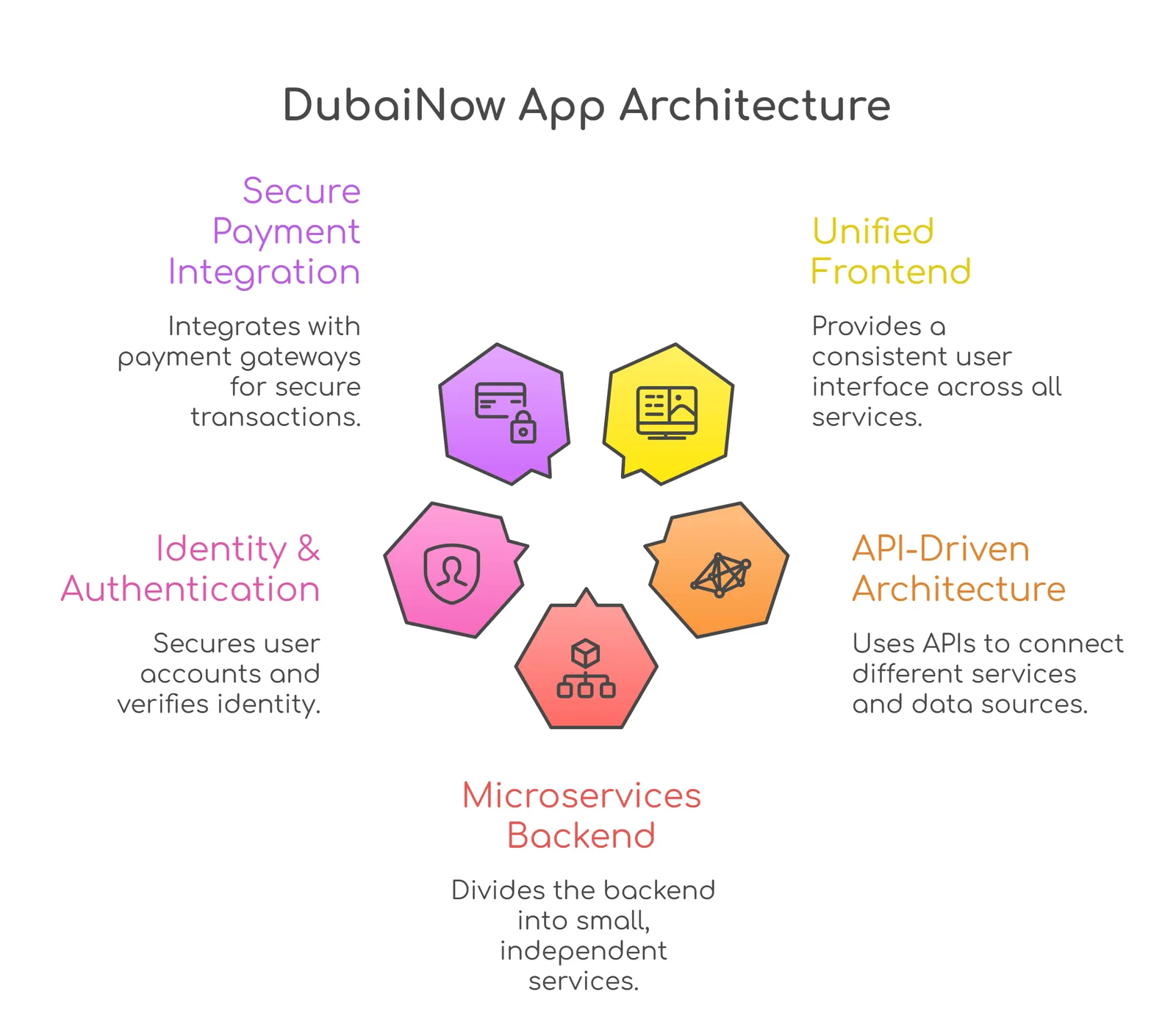
1. Unified Frontend Experience
DubaiNow operates as a single frontend interface where all services are aggregated.
- Built using modern mobile frameworks (native or cross-platform like Flutter/React Native)
- Designed with a user-first approach with minimal steps, clear navigation, and fast load times
- Uses role-based personalization to show relevant services based on user profile
The frontend doesn’t hold the logic for each service, instead, it acts as a gateway that communicates with multiple backend systems.
2. API-Driven Architecture
At the core of DubaiNow is a robust API ecosystem.
- Each service (electricity, traffic fines, healthcare, etc.) is connected via secure APIs
- APIs act as bridges between the app and different government/private systems
- Data is fetched in real time, ensuring users always see live information
This is typically managed through an API Gateway, which:
- Routes requests to the correct service
- Handles authentication and rate limiting
- Ensures consistent communication across systems
3. Microservices-Based Backend
Instead of a single monolithic backend, apps like DubaiNow rely on a microservices architecture.
Each service runs independently, such as:
- Payments service
- User profile service
- Notification service
- Service aggregation layer
This approach allows:
- Faster updates without affecting the entire system
- Better scalability (high-demand services can scale independently)
- Improved fault isolation
4. Identity & Authentication Layer
Security and trust are critical, especially for government-linked services. DubaiNow integrates with centralized identity systems like UAE Pass.
Key components include:
- Single Sign-On (SSO) for seamless login across services
- Multi-factor authentication (OTP, biometrics)
- Secure session management
This ensures users can access multiple services without logging in repeatedly while maintaining high security.
5. Secure Payment Integration
One of the most used features is payments, which is powered by secure integrations.
- Integration with payment gateways like DubaiPay
- Support for cards, wallets, and banking channels
- PCI-DSS-compliant infrastructure for handling transactions
The payment flow typically works like this:
- User selects a service (e.g., bill payment)
- App fetches dues via API
- Payment request is sent to the gateway
- Transaction is processed securely
- Confirmation is sent back to the app in real time
6. Data Management & Integration Layer
DubaiNow connects with multiple databases and legacy systems across departments.
- Uses middleware layers to standardize data formats
- Employs ETL processes for structured data exchange
- Ensures data consistency and synchronization across services
This layer is critical because each government entity may have different data structures and systems.
7. Real-Time Notifications System
To keep users informed, the app uses a notification engine.
- Push notifications for payment confirmations, reminders, updates
- SMS/email integration for critical alerts
- Event-driven architecture (triggers notifications based on user actions)
8. Cloud Infrastructure & Scalability
Apps like DubaiNow are typically hosted on cloud infrastructure to handle large-scale usage.
- Auto-scaling to manage traffic spikes
- Load balancing for high availability
- Distributed servers for low latency
This ensures the app remains fast and reliable even during peak usage.
9. Continuous Testing & Monitoring
Maintaining such a large ecosystem requires constant monitoring.
- Real-time performance monitoring tools
- Automated testing pipelines (CI/CD)
- Error tracking and logging systems
This helps detect issues early and ensures a smooth user experience.
10. Security & Compliance Layer
Given the sensitivity of data, strong security measures are embedded across the system:
- End-to-end encryption (HTTPS, SSL/TLS)
- Data masking and tokenization
- Compliance with regional data protection regulations
In simple terms, DubaiNow works as a digital aggregator powered by APIs, microservices, and secure integrations.
That’s exactly what makes it a connected digital ecosystem. And replicating this requires not just development, but the right architecture, integrations, and long-term scalability planning.
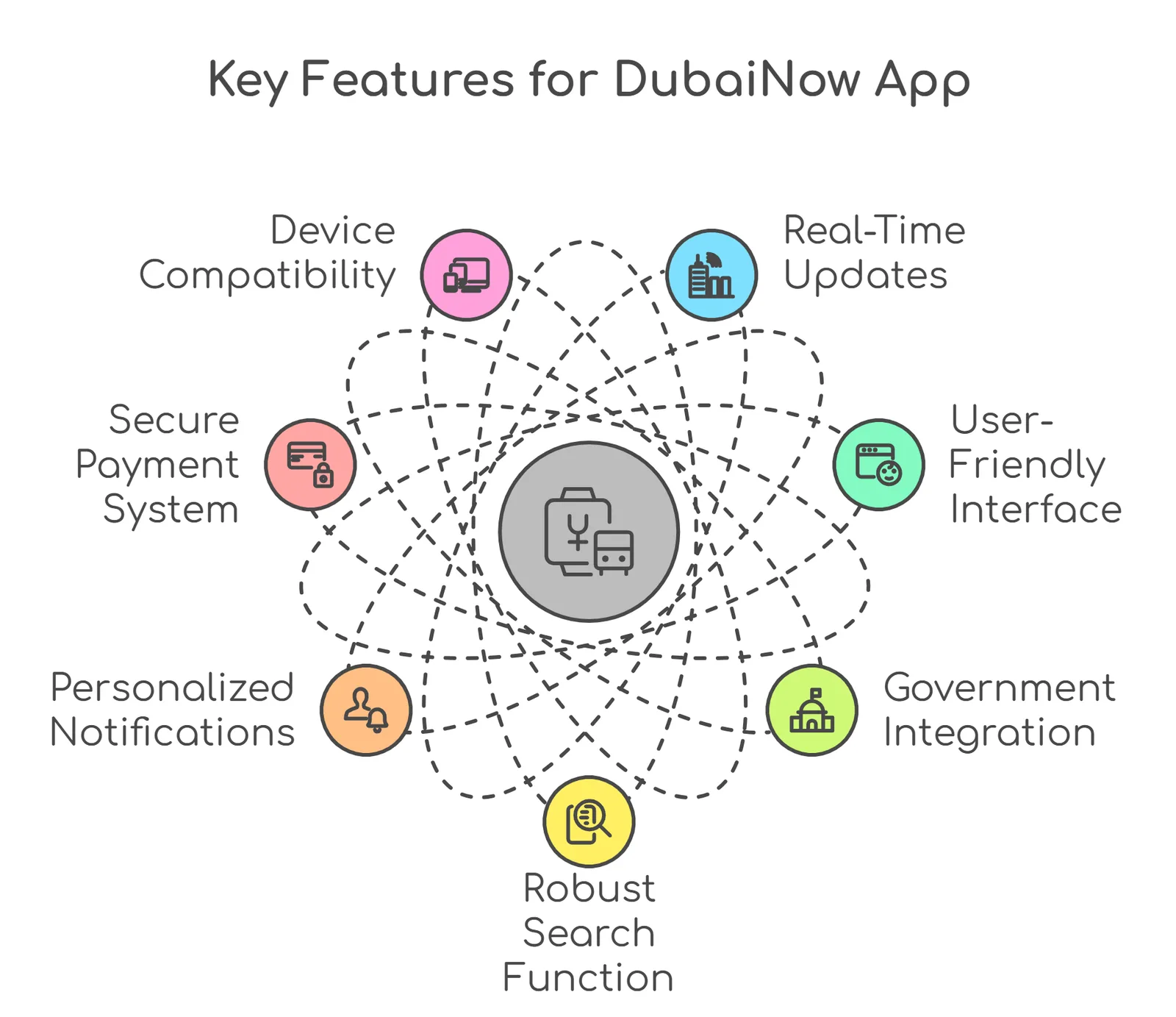
Core features you need to build an app like DubaiNow
Building a super app like DubaiNow is about creating a smooth, reliable experience where everything works together effortlessly. Below are the essential features that form the foundation of such a platform.
1. User Registration & Verification
The first interaction sets the tone for trust.
Users should be able to sign up and verify their identity quickly using:
- OTP-based authentication
- Biometric login (fingerprint or face ID)
- Secure ID verification
A fast and secure onboarding process ensures users can start using services without friction.
2. Personalized Dashboard
Once users log in, they should see what matters to them instantly.
A smart dashboard should:
- Highlight frequently used services
- Show pending payments or alerts
- Offer quick shortcuts for common actions
The goal is simple, less searching, more doing.
3. Government & Service Integration
This is the core of the app.
Your platform should connect with:
- Government departments
- Utility providers
- Private service platforms
Through strong API integrations, users can access multiple services without switching apps, creating a truly unified experience.
4. Bills, Payments & Transactions
Payments are one of the most used features, so they need to be seamless.
Your app should support:
- Utility bill payments
- Traffic fines and service charges
- Multiple payment methods (cards, wallets, banking)
Real-time confirmations and a clean transaction history help build user confidence.
5. Visa & Document Services
Handling official documents digitally is a huge value add.
Users should be able to:
- Check visa status and updates
- Apply for services or renewals
- Store and access important documents
This reduces dependency on physical processes and saves time.
6. Vehicle & Driving Services
For everyday convenience, vehicle-related services are essential.
Features can include:
- Driving license management
- Vehicle registration details
- Parking payments and tracking
Bringing all of this into one place makes daily tasks much simpler.
7. Real-Time Notifications & Alerts
Users shouldn’t have to remember everything.
The app should automatically notify them about:
- Payment due dates
- Service updates
- Important reminders (like renewals or expirations)
This makes the app feel proactive rather than passive.
8. Multilingual Support & Accessibility
A diverse user base requires inclusive design.
Your app should:
- Support multiple languages
- Be easy to navigate for all age groups
- Include accessibility features for better usability
This ensures the platform is usable by everyone.
Some AI & Automation Features you might want to Consider while Building an App like DubaiNow
Once the core is in place, AI and automation are what elevate the experience from functional to exceptional.
1. AI-Based Personalization
The app should learn from user behavior.
- Suggest services based on usage patterns
- Highlight upcoming actions automatically
- Customize the dashboard dynamically
This creates a more intuitive experience over time.
2. Smart Chatbots & Assistance
Instead of searching, users can simply ask.
AI-powered assistants can:
- Answer queries instantly
- Guide users through processes
- Help complete actions within the chat
This reduces friction and improves engagement.
3. Predictive Alerts & Automation
Go beyond basic reminders.
- Notify users before they miss deadlines
- Suggest next actions based on past activity
- Automate recurring payments or tasks
It’s about making the app think ahead.
4. Intelligent Document Processing
Make document handling effortless.
- Auto-scan and extract data from uploads
- Pre-fill forms using saved information
- Reduce manual errors
This saves time and improves accuracy.
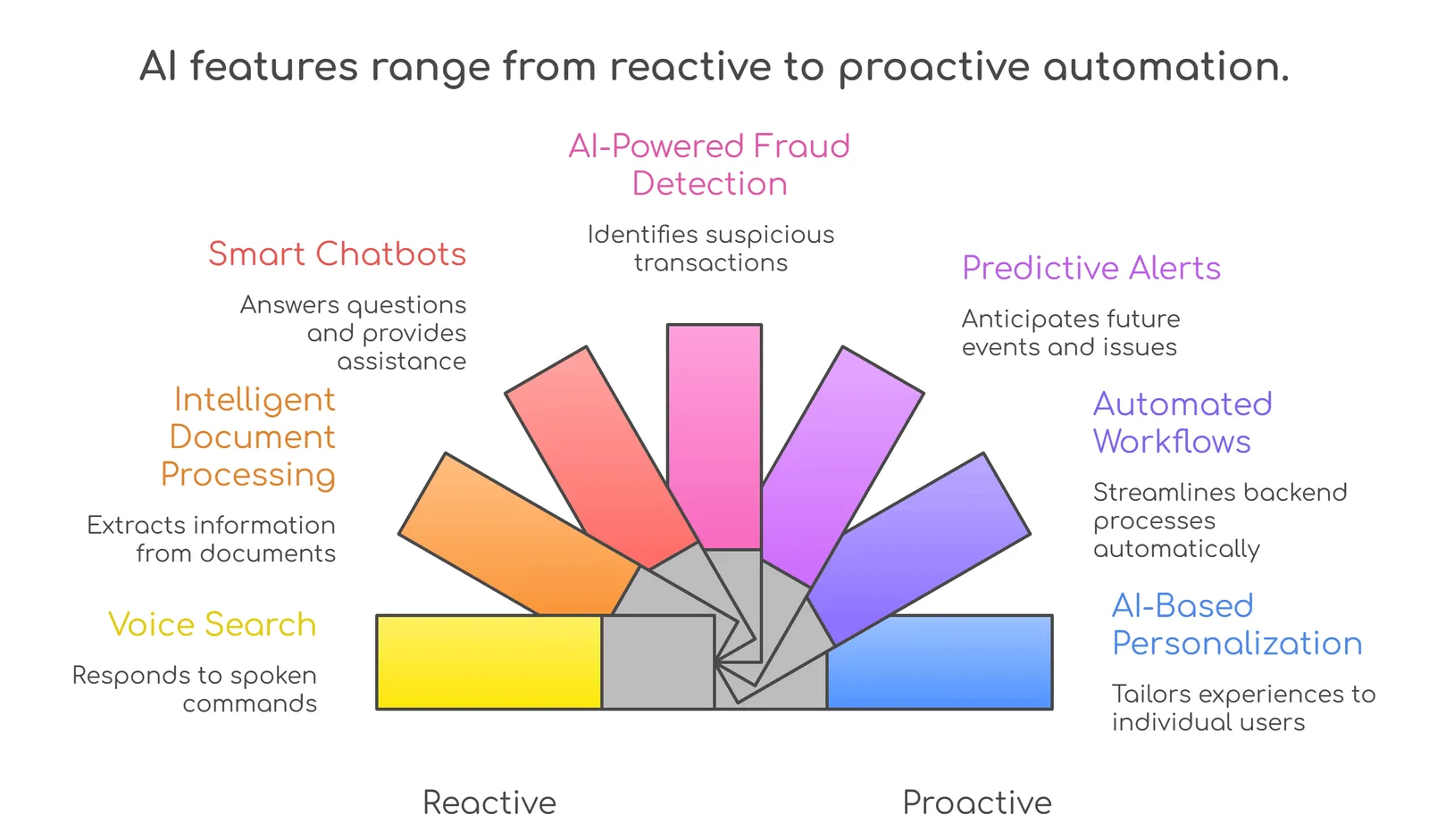
5. AI-Powered Fraud Detection
Security becomes smarter with AI.
- Detect unusual activity patterns
- Flag suspicious transactions instantly
- Add extra verification when needed
This strengthens trust without complicating the experience.
6. Voice Search & Commands
Make the app more natural to use.
- Search services using voice
- Perform actions hands-free
- Improve accessibility for all users
7. Automated Backend Workflows
Efficiency behind the scenes is just as important.
- Auto-process service requests
- Reduce manual approvals
- Speed up response times
This ensures the system scales smoothly as usage grows.
To build something like DubaiNow, you need connected experiences. The core features ensure functionality. AI and automation ensure effortlessness. And that’s what truly defines a modern super app.
Now comes the third-party integrations that nobody talks about
When building an app like DubaiNow, most people get excited about features like payments, dashboards, services, AI, and so on.
But the toughest part isn’t building the app, it’s connecting everything behind it. Because your app doesn’t actually “own” most of the services. It depends on other systems like government databases, payment gateways, utility providers, and more. And making all of them work together smoothly is where things get tricky.
- Many systems are involved
Think of your app as a middle layer. On one side, you have users. On the other side, you have multiple external systems.
Each of these systems:
- Works differently
- Stores data in its own format
- Has its own speed and reliability
Your job is to make all of this feel like one seamless experience to the user. That’s easier said than done.
- Every integration is a different story
No two integrations are the same.
One service might have:
- Clean, well-documented APIs
- Fast response times
Another might:
- Have limited documentation
- Respond slowly
- Break unexpectedly
So instead of “plug and play,” you end up custom-building each connection.
- Legacy system problem
A lot of government and enterprise platforms are not built for modern apps.
They may:
- Run on older infrastructure
- Lack real-time capabilities
- Not support modern API standards
So what do you do?
You build a middleware layer, a kind of translator that:
- Converts data into a usable format
- Handles communication between systems
- Smooths out inconsistencies
It’s extra work, but without it, things simply won’t connect properly.
- When one service fails, your app feels it
Here’s something most people don’t realize:
Even if your app is perfectly built, it can still fail… because of someone else’s system.
For example:
- A payment gateway is down → users can’t pay
- A government API is slow → app feels laggy
- A data service returns wrong info → users lose trust
That’s why you need safeguards like:
- Retry mechanisms
- Backup flows
- Clear error handling
Because users won’t blame the third party, they’ll blame your app.
- Keeping data in sync is complex
Different systems update data at different speeds.
- One service might update instantly
- Another might take a few minutes (or longer)
Now imagine a user checking their bill:
- They just paid it
- But it still shows as “pending”
That creates confusion.
To avoid this, your app needs:
- Smart data syncing
- Caching strategies
- Real-time updates wherever possible
- Security is critical
You’re dealing with:
- Personal data
- Payments
- Government records
Each integration must be secure.
This includes:
- Encrypted data transfer
- Secure authentication (tokens, OAuth)
- Compliance with local regulations
One weak integration can become a serious risk.
- Continuous testing
Testing an app like this is not a one-time task.
You have to constantly check:
- Are APIs working as expected?
- What happens if a service fails?
- How does the app behave under heavy load?
And even a small update in a third-party API can break your flow.
So testing never really stops.
- Maintenance is ongoing
Integrations are not “set and forget.”
Over time:
- APIs change
- Services get updated or removed
- New integrations are added
This means your team has to:
- Monitor performance
- Fix issues quickly
- Keep everything up to date
- AI & Automation make a difference
While integrations are complex, AI can help manage the chaos.
For example:
- Detect slow or failing APIs in real time
- Predict potential issues before they happen
- Automate testing across multiple services
- Optimize how requests are routed
It doesn’t remove the challenge, but it makes it much easier to handle at scale.
All in all, third-party integrations are the invisible engine of a super app. Users don’t see them. But they feel them, every time something works (or doesn’t).
If done right, everything feels smooth and effortless. If done poorly, even the best-designed app will struggle. That’s why building an app like DubaiNow is about making multiple systems behave like one.
Cost to build an app like DubaiNow
One of the most common questions businesses ask is: “How much does it actually cost to build a super app like this?”
The honest answer is, it depends.
The cost isn’t just about building an app interface. It includes backend systems, integrations, security layers, scalability, and ongoing maintenance. The more services you plan to combine, the more complex (and expensive) the development becomes.
Let’s break it down in a way that’s easy to understand.
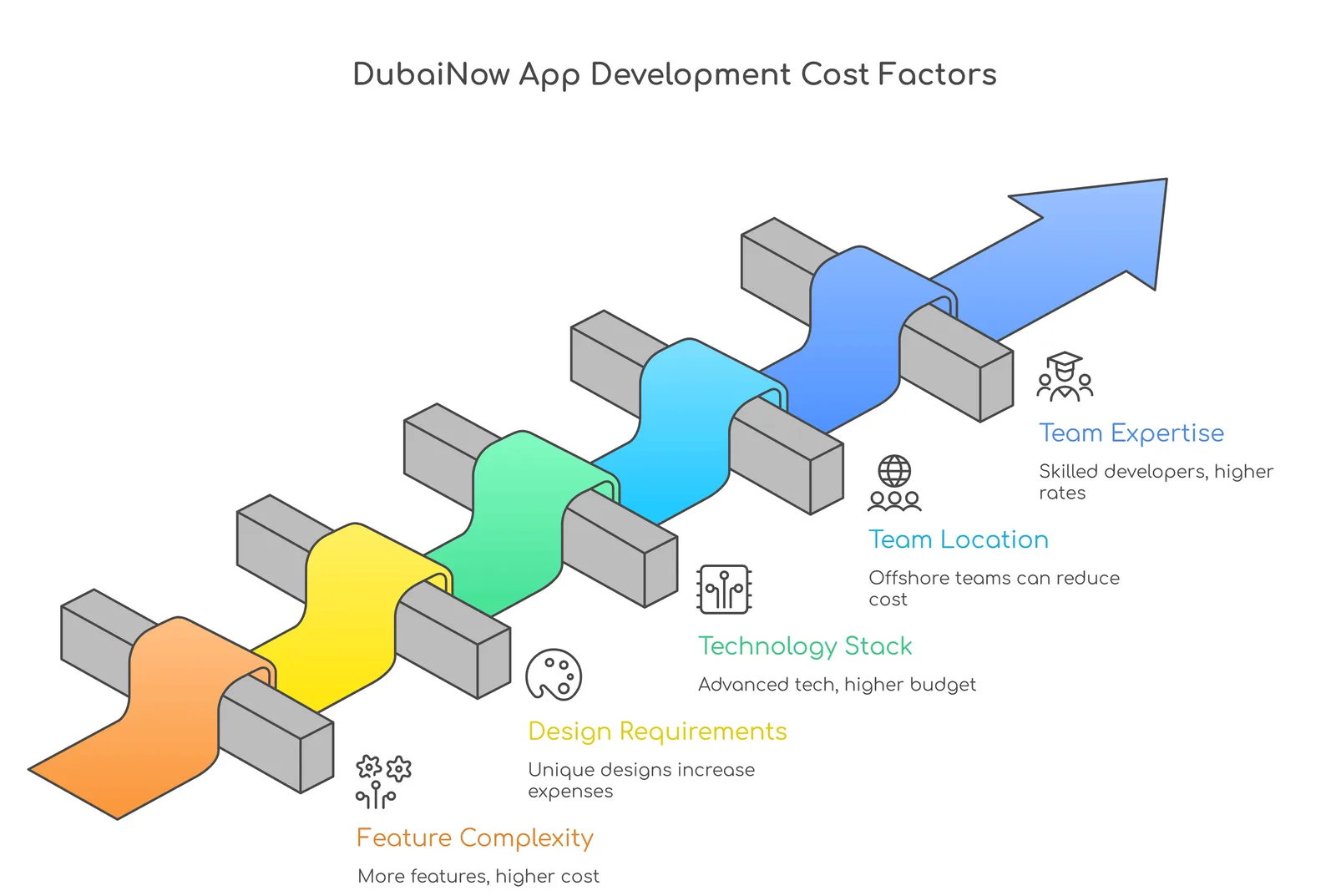
What Impacts the Cost?
- The number of services you want to integrate plays a huge role. A simple app with limited features costs far less than a platform connecting multiple ecosystems.
- Third-party integrations significantly increase cost because each service requires custom API connections, testing, and maintenance.
- UI/UX design also matters. A clean, intuitive experience takes more planning and iteration than a basic interface.
- Security requirements add another layer of investment, especially when dealing with payments, personal data, and compliance.
- The choice of technology stack and whether you build native or cross-platform apps can influence development time and cost.
- AI and automation features increase upfront cost but can improve long-term efficiency and user experience.
Estimated Cost Comparison
Here’s a simple breakdown to help you understand how costs scale based on complexity:
| App Type | Description | Estimated Cost (USD) | Timeline |
| Basic App | Limited services, simple UI, basic payments, minimal integrations | $25,000 - $50,000 | 2 - 4 months |
| Advanced App | Multiple services, strong UI/UX, secure payments, API integrations | $60,000 - $120,000 | 4 - 8 months |
| Complex App | Full super app with multi-service ecosystem, AI features, heavy integrations | $150,000- $300,000+ | 8 - 14+ months |
| Examples | GPT, Gemini, LLaMA | BloombergGPT, Med-PaLM | ChatGPT Enterprise with document connectors, RAG-based copilots |
What does each level actually mean?
A basic app is a good starting point if you want to validate your idea. It focuses on core functionality with limited integrations and a straightforward user journey.
An advanced app is where things start to get closer to a real ecosystem. You’ll have multiple services working together, better design, stronger security, and smoother performance.
A complex app is where you build something close to DubaiNow. This includes deep integrations, real-time data handling, AI-driven features, scalable infrastructure, and continuous optimization.
Hidden costs you shouldn’t ignore
Development is just one part of the investment.
You also need to consider:
- Ongoing maintenance and updates
- Server and cloud infrastructure costs
- API usage and third-party service fees
- Security upgrades and compliance
- Feature enhancements over time
These costs continue even after the app is launched.
Building an app like DubaiNow is a long-term digital investment. You’re not just creating an app. You’re building a connected ecosystem that needs to evolve, scale, and adapt over time.
That’s why most businesses start small, validate their concept, and then gradually expand into a full-fledged super app.
Should you start off with Limited services for efficient GTM or what should be the approach?
If you’re planning to build an app like DubaiNow, it’s tempting to launch with everything at once, a full suite of services, multiple integrations, and a complete ecosystem from day one.
But in reality, that approach often slows you down.
Start Small, But Start Smart
Launching with limited services is usually the more practical route, not because you can’t build more, but because you shouldn’t try to do everything at once.
An early version of your app should focus on:
- A few high-value services
- A smooth and reliable user experience
- Solving a clear, everyday problem
This helps you enter the market faster and start learning from real users instead of assumptions.
Think in Terms of an MVP (Minimum Viable Product)
Your first version needs to be useful.
An MVP allows you to:
- Test your idea in the real market
- Understand what users actually use
- Identify gaps and friction points early
Instead of building a large system upfront, you build something focused and improve it step by step.
Choose Services That Drive Daily Usage
Not all services are equal in the beginning.
You should prioritize services that:
- Users need frequently (like payments or bills)
- Offer immediate value
- Encourage repeat usage
This helps your app become part of the user’s routine, which is critical for long-term adoption.
Build the Right Foundation Early
Even if you start small, your architecture shouldn’t be.
Your backend, APIs, and integrations should be designed in a way that:
- Allows easy addition of new services
- Supports scaling without major rework
- Maintains performance as usage grows
So while your features are limited, your foundation should be future-ready.
Gradually Expand Based on Real Data
Once your app is live, your roadmap should be driven by actual usage.
- Which services are users engaging with the most?
- Where are they dropping off?
- What are they asking for next?
This data helps you decide what to build next, instead of guessing.
Avoid the “All-in-One from Day One” Trap
Trying to launch a fully loaded super app at once often leads to:
- Delayed timelines
- Higher costs
- Complex integrations that are harder to manage
- A confusing user experience
In many cases, it slows down your go-to-market instead of accelerating it.
Where AI Can Help in GTM
AI can make your early-stage strategy even more effective.
- Analyze user behavior to identify high-impact features
- Personalize experiences even with limited services
- Automate feedback analysis and user insights
This allows you to grow smarter, not just faster.
So, What’s the Right Approach?
- Start with fewer services, but make them work exceptionally well.
- Focus on usability, reliability, and real value.
- Then expand gradually, based on what your users actually need.
Therefore, apps like DubaiNow didn’t become comprehensive overnight. They evolved over time. Your goal shouldn’t be to launch a super app immediately. Your goal should be to build toward one, step by step, with clarity and purpose.
How can Antino help you build an app like DubaiNow?
Building an app like DubaiNow demands the right strategy, scalable architecture, and seamless integrations from day one. That’s where Antino comes in. We're a leading app development company with experts working closely with you to understand your vision, identify high-impact services, and design a roadmap that ensures faster go-to-market without compromising on quality.
From intuitive UI/UX to robust backend systems and secure API integrations, we focus on creating a platform that is not just functional, but truly reliable and future-ready.
What sets Antino apart is our ability to turn complex ecosystems into simple user experiences. Whether it’s integrating multiple third-party services, enabling secure payment systems, or embedding AI-driven features for personalization and automation, we help you build a connected digital ecosystem that scales with your business.
With a strong focus on performance, security, and continuous improvement, Antino becomes your long-term technology partner by helping you evolve from a single app to a full-fledged super app, step by step.